

TL;DR:
- Proper care for string bracelets involves gentle cleaning, careful handling, and proper storage to maintain their appearance and strength. Regularly wipe them with a dry cloth, avoid harsh chemicals, and store each piece separately in a cool, dark place to prevent damage. Restring your bracelet when signs of fraying or gaps appear to prolong its lifespan and preserve its symbolic value.
Proper care for string bracelets means gentle cleaning, careful handling, and smart storage to preserve both appearance and structural integrity. String bracelets, known in textile jewelry terms as woven cord or thread accessories, face daily stress from sweat, skin oils, and cosmetics. These substances chemically interact with fibers, causing swelling, discoloration, and gradual breakdown. The good news is that a consistent, simple routine protects your bracelet far better than any expensive product. This guide covers everything you need: cleaning methods, handling habits, storage strategies, and when to restring.
How to care for string bracelets: cleaning methods that work
Cleaning is the foundation of any string bracelet care guide. The goal is to remove daily buildup without damaging the fibers or any beads threaded onto the cord.
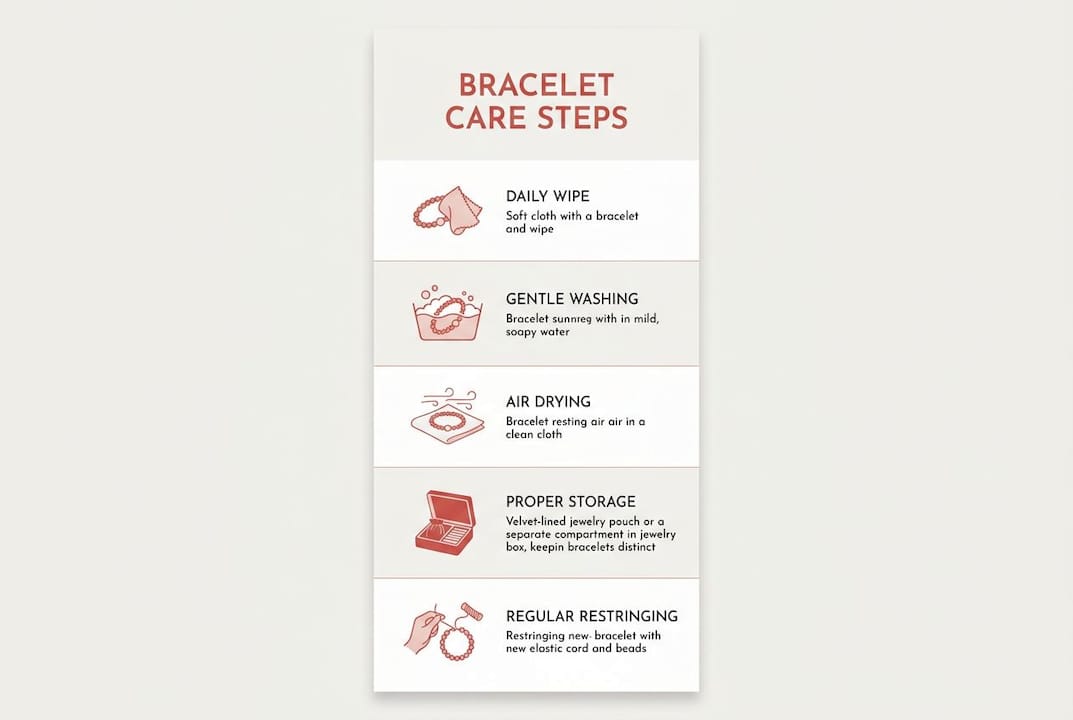
Daily cleaning with a dry cloth is the simplest and most effective habit you can build. A soft microfiber cloth removes dust, skin oils, and surface debris without introducing moisture. This single step, done after each wear, does more for longevity than occasional deep cleaning.
When your bracelet needs more than a dry wipe, spot cleaning with mild detergent works well. Use a small amount of gentle soap, like a fragrance-free dish soap or baby shampoo, diluted in cool water. Dab the solution onto the bracelet with a soft cloth or cotton swab. Work in small sections rather than soaking the whole piece.
Here is what to avoid during any cleaning session:
- Bleach, alcohol-based sprays, or jewelry cleaning solutions designed for metal
- Abrasive scrubbing pads or stiff brushes that fray fibers
- Soaking the bracelet in water for extended periods
- Applying perfume or lotion directly onto the bracelet
Chemical cleaning agents degrade cord elasticity and damage bead plating, leading to premature wear. That means even a single exposure to a harsh cleaner can shorten your bracelet’s life noticeably.
After any wet cleaning, lay the bracelet flat on a clean towel and let it air dry completely before storing or wearing it. Storing a damp bracelet traps moisture against the fibers, which accelerates breakdown and can cause mildew on natural thread materials.
Pro Tip: Never wring or twist a wet string bracelet to speed up drying. Lay it flat and let air do the work. Twisting wet fibers creates micro-kinks that weaken the cord permanently.
What wearing habits damage string bracelets most?
Mechanical damage from tugging and tangling is the primary cause of string bracelet failure, more than chemical exposure. This surprises most people, who focus on cleaning while ignoring how they put their bracelet on and take it off.
Pulling a bracelet forcibly over your hand stretches the cord beyond its natural range. Over time, this creates micro-kinks in the fibers. Those kinks become weak points, and the bracelet eventually snaps at one of them. The fix is simple: use a clasp if your bracelet has one, or roll the bracelet gently over your wrist rather than yanking it.
Follow these habits to protect your bracelet during wear:
- Remove your bracelet before washing hands, showering, or swimming
- Take it off before applying lotion, sunscreen, or perfume
- Avoid wearing it during workouts where heavy sweating is likely
- Keep it away from other jewelry that could snag or tangle with it
Sweat and cosmetics chemically interact with fibers, causing swelling and fiber degradation over time. Elastic cords are especially vulnerable because they absorb moisture and lose their original shape. This is not just about aesthetics. A swollen, stretched cord puts more stress on knots and beads, which accelerates the whole bracelet’s decline.
Tangling with other jewelry is another underrated threat. When a string bracelet catches on a chain or another bracelet, the sudden pull creates exactly the kind of mechanical stress that causes breakage. If you wear stacked pieces, check out bracelet stacking tips to organize your wrist without creating friction between pieces.
Pro Tip: After each wear, check the knots on your bracelet. If any feel loose, secure them immediately with a tiny drop of clear nail polish or jewelry glue. Catching a loose knot early costs you nothing. Ignoring it costs you the bracelet.
How should you store string bracelets to prevent damage?
Storage is where most people make avoidable mistakes. A bracelet left on a dresser in direct sunlight or tossed into a jewelry box with metal pieces will degrade faster than one stored with intention.
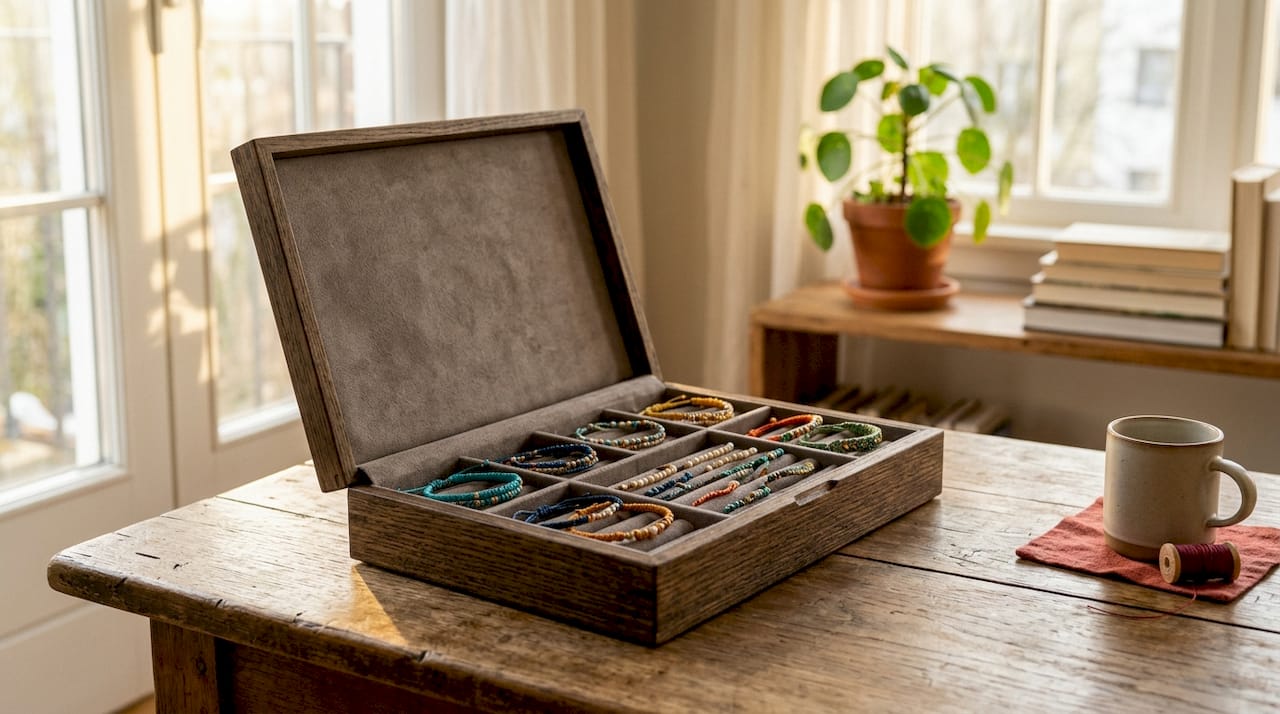
Store string bracelets separately in soft pouches or lined compartments, away from sunlight and humidity. Rubbing against harder materials causes surface abrasion, while UV exposure fades colors and weakens fibers. A small velvet pouch costs almost nothing and solves both problems at once.
The table below shows the difference between ideal and harmful storage conditions:
| Storage factor | Ideal approach | Harmful approach |
|---|---|---|
| Location | Cool, dry drawer or jewelry box | Bathroom shelf or windowsill |
| Light exposure | Dark or low-light environment | Direct sunlight |
| Humidity | Dry environment, silica gel packet nearby | Near a sink or in a humid room |
| Separation | Individual soft pouch per bracelet | Loose in a shared jewelry tray |
| Position | Laid flat or hung straight | Coiled tightly or knotted |
Laying a bracelet flat prevents kinking, which is the storage equivalent of the micro-kinks caused by tugging. A bracelet stored in a tight coil for weeks develops a permanent curve that affects both appearance and how it sits on the wrist.
Keep your storage area free from aerosol sprays, cleaning products, and dust. Chemicals in the air settle onto fibers just as they do when applied directly to skin. A closed box or drawer provides the best protection with minimal effort.
When and how to restring your string bracelet
Restringing is preventive maintenance, not emergency repair. Treating it as routine upkeep rather than a last resort helps you avoid bead loss and keeps the bracelet wearable for years longer.
Watch for these signs that your bracelet needs attention:
- Fuzzing or fraying near the clasp or along the cord body
- Visible gaps between beads that were once snug against each other
- Loose or sliding knots that no longer hold their position
- Discoloration or stiffness in the cord that was not there when new
- Stretching that makes the bracelet noticeably looser than its original fit
Bracelets typically need restringing every 1–2 years under frequent wear. That timeline shortens if you wear the bracelet daily through activities involving water, sweat, or physical contact. Gaps between beads are the clearest warning sign. They mean the cord has stretched or frayed to the point where it can no longer hold tension between beads.
The restringing process itself is straightforward for simple designs. You need replacement cord in the same diameter as the original, scissors, a beading needle, and jewelry glue or a lighter to seal the ends. Thread the new cord through each bead in the original order, tie a secure knot at each end, and seal the knot with a small drop of glue. For bracelets with complex knotting patterns, like macramé or multi-strand woven designs, a professional jeweler or artisan is worth consulting. The cost is low and the result is a bracelet that looks and feels new.
Routine restringing before total breakage prevents bead loss and extends the bracelet’s usable life. A broken cord mid-wear often means beads scatter and are lost. Restringing at the first sign of fraying avoids that entirely.
For a deeper look at repair techniques, the Jewelsbyares guide on fixing broken string bracelets covers the process step by step, including how to handle different cord types and knotting styles.
Pro Tip: Set a reminder every six months to inspect your most-worn bracelets. Check the cord near the clasp first. That spot takes the most mechanical stress and shows wear before the rest of the bracelet does.
Key Takeaways
Consistent gentle handling and proper storage extend string bracelet life more than any cleaning product or repair technique.
| Point | Details |
|---|---|
| Daily dry wiping | Use a soft microfiber cloth after each wear to remove oils and debris. |
| Avoid chemical exposure | Keep bracelets away from perfume, lotion, bleach, and harsh cleaners. |
| Handle gently | Roll bracelets on and off; never tug or stretch them over the hand. |
| Store individually | Use soft pouches in a cool, dry, dark place away from other jewelry. |
| Restring proactively | Inspect every six months and restring at the first sign of fraying or gaps. |
What I’ve learned from years of watching bracelets age
Most people treat string bracelet care as something they will get to eventually. They buy a beautiful piece, wear it constantly, and then wonder why it looks worn after a few months. The truth is that the bracelet did not fail. The routine did.
The single biggest shift I have seen make a difference is accepting that textiles age naturally. Gentle handling matters more than expensive cleaning products. A bracelet treated with daily dry wiping and careful handling will outlast one that gets monthly deep cleans but is yanked on and off carelessly every day.
What most articles skip is the emotional side of this. String bracelets, especially pieces with cultural or personal meaning, deserve the same attention you give to fine jewelry. A red string bracelet rooted in Kabbalah tradition or a woven thread piece from a meaningful trip carries weight beyond its materials. Caring for it consistently is a way of honoring what it represents.
The other thing I would push back on is the idea that restringing is a sign of failure. It is the opposite. A bracelet that gets restrung every couple of years is a bracelet that is being worn and loved. The thread types used in quality bracelets are designed to be replaced. That is not a flaw in the design. It is part of how textile jewelry works.
Build the habit. Wipe it after wearing. Store it properly. Check the knots. Restring when needed. That is the whole system, and it works.
— Danielius
String bracelets worth caring for, from Jewelsbyares
A bracelet made with quality materials is easier to care for and lasts longer under daily wear. Jewelsbyares crafts its string bracelet collections from premium threads, waxed cords, and ethically sourced materials that respond well to the care practices covered here. The fibers hold color longer, the knots stay secure, and the overall construction tolerates regular wear without rapid degradation. Whether you are drawn to a diamond string bracelet for understated elegance or a red thread bracelet for its symbolic meaning, each piece is built to be worn and maintained for years. For additional guidance on keeping your pieces in top condition, the Jewelsbyares jewelry care resource covers material-specific tips across the full collection.
FAQ
How often should I clean my string bracelet?
Wipe your bracelet with a soft microfiber cloth after every wear. Deep cleaning with mild soap and water is needed only when visible dirt or odor builds up.
Can I wear my string bracelet in the shower or pool?
No. Water, chlorine, and soap cause fiber swelling and accelerate cord degradation. Remove your bracelet before any water exposure.
How do I know when to restring my bracelet?
Look for fraying near the clasp, visible gaps between beads, or knots that slide out of position. Bracelets worn frequently typically need restringing every 1–2 years.
What is the best way to store a string bracelet?
Store it flat or hanging in an individual soft pouch, away from direct sunlight, humidity, and other jewelry. A cool, dry drawer works well for most people.
Does sweat damage string bracelets?
Yes. Sweat and skin oils cause fiber swelling and chemical degradation over time. Wiping the bracelet after wear and removing it during workouts significantly slows this process.