TL;DR:
- String bracelets are wrist accessories made from fibers, cords, or threads shaped through knotting, weaving, or braiding techniques. They serve various purposes and cultural meanings, from simple friendship bands to symbolic red strings rooted in traditions. Choosing the right type depends on material, construction, symbolism, and lifestyle considerations.
String bracelets are wrist accessories made from fibers, cords, or threads shaped through knotting, weaving, or braiding techniques. The types of string bracelets available today span everything from simple friendship bands to diamond-accented fine jewelry, and each category carries its own material logic, cultural history, and wearing purpose. Whether you are buying for yourself, choosing a gift, or drawn to the symbolic weight of a red string, knowing the differences between materials and construction methods helps you pick the right piece for the right reason.
1. What are the main types of string bracelets?
String bracelets fall into four core categories based on material and construction: elastic cord bracelets, woven or macramé bracelets, thread-based bead bracelets, and symbolic string bracelets. Each type serves a different purpose and suits a different lifestyle.
- Elastic cord bracelets: These use stretch cord, typically made from TPU or latex-core nylon, to hold beads without a clasp. 0.8mm elastic cord is the recommended diameter for daily wear bead bracelets. Finer 0.5mm cords break more frequently under repeated stress.
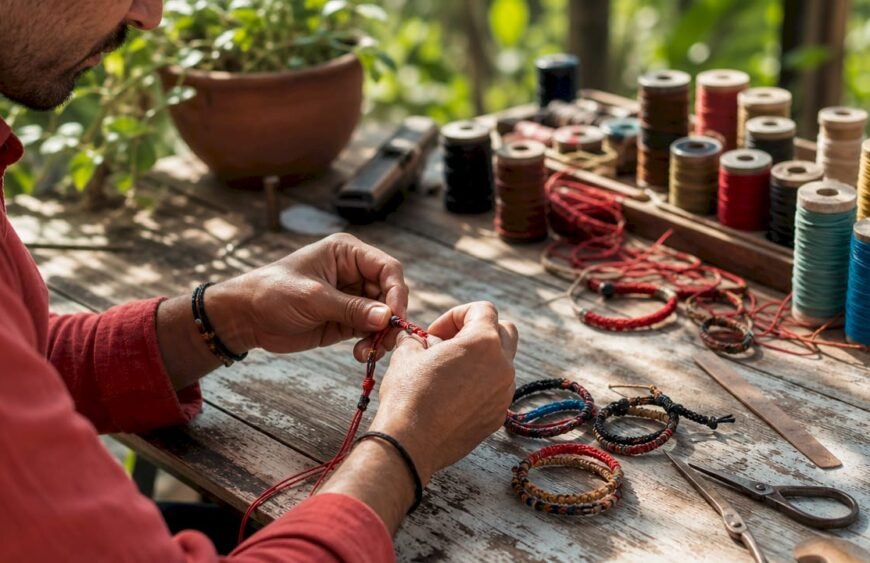
- Woven and macramé bracelets: These use nylon, polyester, or cotton thread knotted into patterns. The structure comes entirely from the knots, not from beads or hardware.
- Thread-based bead bracelets: Nylon or polyester thread strings beads into a design. The thread is thinner than cord and allows for detailed, color-rich compositions.
- Symbolic red string bracelets: These prioritize cultural meaning over construction complexity. The material is often wool, silk, or cotton, and the bracelet’s value comes from its tradition as much as its appearance.
Consejo de experto: Cotton thread feels softer against the skin but absorbs water and weakens over time. Synthetic nylon or polyester threads resist moisture and hold their color longer, making them better for daily wear.
2. Examples of traditional string bracelets and their symbolism
Traditional string bracelets carry meaning that goes far beyond decoration. They are among the oldest forms of wearable symbolism across cultures.
Friendship bracelets use classic knotting patterns like the chevron or diamond stitch. These patterns originated in Central and South American indigenous craft traditions and became globally popular in the 1970s and 1980s. The act of making and giving one carries the intention of the maker.
Kabbalah red string bracelets follow specific ritual protocols. Kabbalah red strings are traditionally made from crimson wool sourced from Rachel’s Tomb in Israel, tied on the left wrist by a trusted person, and worn as protection against negative energy. Self-tying is discouraged because the ritual requires another person’s intention to activate its protective meaning.
Tibetan Buddhist red strings share a similar philosophy. Tibetan red strings are hand-braided or blessed by monks with mantras and worn on the left wrist. The material is typically silk or cotton. The blessing, not the fiber, is considered the source of protection.
Chinese knot bracelets use decorative knotting techniques with names like the Double Coin knot and the Never Part knot, which symbolize unbreakable bonds and prosperity. These bracelets combine craft skill with layered historical meaning.
“In spiritual traditions like Kabbalah and Tibetan Buddhism, the act of another person tying the bracelet is integral to activating its protective qualities.”
The symbolic power of these pieces is inseparable from their making. That is what separates a traditional string bracelet from a purely decorative one.
3. Cord bracelet vs thread bracelet: what’s the difference?
The difference between a cord bracelet and a thread bracelet comes down to thickness, fiber composition, and intended use.
Cord refers to a thicker, often multi-strand or braided material. Waxed cord, leather cord, and braided nylon cord fall into this category. Cord bracelets have a bolder, more structured look. They resist abrasion well and hold their shape under daily wear. Synthetic cords also resist water, making them practical for active lifestyles.
Thread is thinner and softer. Embroidery floss, silk thread, and fine nylon thread are used for weaving intricate patterns or stringing small beads. Thread bracelets have a delicate, detailed appearance. Regular sewing thread lacks the tensile strength needed for wearable bracelets. Beading thread and stretch cord are engineered for repeated stress and movement.
| Feature | Cord bracelet | Thread bracelet |
|---|---|---|
| Thickness | Thicker, 1mm+ | Thinner, under 1mm |
| Typical materials | Waxed nylon, leather cord, braided poly | Embroidery floss, silk, fine nylon |
| Best for | Daily wear, active use, stacking | Detailed patterns, delicate beadwork |
| Water resistance | High (synthetic cords) | Low to moderate |
| Appearance | Bold, structured | Delicate, intricate |
Consejo de experto: If you swim, exercise, or work with your hands, choose a waxed or braided synthetic cord bracelet. Thread bracelets are better suited for occasional wear or office settings where they won’t face constant friction.
Material composition matters more than thickness for durability. A thin nylon cord outlasts a thick cotton thread in wet or high-friction conditions. Match the material to your actual lifestyle, not just your style preference.
4. How to choose the best string bracelet for your needs
Choosing the right bracelet means thinking about four things: adjustability, material, meaning, and budget.
1. Prioritize adjustability. Sliding knots are the most practical closure for string bracelets. They accommodate wrist size variation and make the bracelet easier to put on and take off without a clasp. Fixed-length bracelets with no adjustment can feel too tight after a meal or too loose in cold weather.
2. Match the material to your lifestyle. Cotton and silk feel luxurious but require more care. Synthetic nylon and polyester handle daily wear, moisture, and friction far better. For bead bracelets, 0.8mm elastic cord balances durability with bead hole compatibility. It works well with clay, acrylic, and letter beads without excessive slack.
3. Consider the symbolic meaning. A bracelet worn for protection, luck, or connection carries more weight when you understand its origin. Red string bracelets, for example, mean different things in Kabbalah, Tibetan Buddhism, and Latin American traditions. Knowing which tradition resonates with you makes the piece more personal. You can read more about the deeper meaning of red thread before choosing.
4. Set a realistic budget. The best string bracelets under $50 are widely available in cotton, nylon, and waxed cord. At this price point, you can find well-made pieces with genuine symbolic designs, quality knotting, and durable materials. Spending more typically gets you upgraded materials like sterling silver accents, genuine gemstones, or certified diamonds. Jewelsbyares offers pieces across this range, from everyday thread bracelets to diamond-accented string bracelets for milestone moments.
5. Care extends the life of any bracelet. Remove string bracelets before swimming in chlorinated water or applying lotion. Store them flat or loosely coiled to prevent kinking. For elastic cord bracelets, avoid overstretching when putting them on. Elastic bead cords like TPU-based materials can return to their original length after significant stretch, but repeated overstretching weakens the core over time.
Puntos clave
The most durable and meaningful string bracelet is one where the material matches your lifestyle, the construction suits your wearing habits, and the symbolism aligns with your intention.
| Punto | Detalles |
|---|---|
| Material drives durability | Synthetic nylon and polyester outlast cotton and silk in daily, active wear. |
| 0.8mm cord is the standard | For bead bracelets, 0.8mm elastic cord offers the best balance of strength and fit. |
| Cord and thread serve different purposes | Cord bracelets handle daily wear; thread bracelets suit detailed patterns and lighter use. |
| Symbolic bracelets require context | Red strings in Kabbalah and Tibetan traditions must be tied by another person to carry full meaning. |
| Sliding knots beat fixed clasps | Adjustable closures accommodate size variation and make bracelets easier to wear long-term. |
Why I think most people choose string bracelets for the wrong reasons
People often pick a string bracelet because it looks good in a photo. That is not a bad reason, but it is an incomplete one. After years of working with handcrafted jewelry, I have found that the pieces people wear longest are the ones tied to a specific memory, person, or intention.
The symbolic weight of a properly tied red string is not superstition. It is a ritual of attention. When someone else ties the bracelet on your wrist, you are both present for that moment. That is rare in modern gift-giving, and it is why symbolic jewelry tends to outlast trend-driven accessories in a person’s rotation.
I have also seen people ruin good bracelets by ignoring material basics. A beautiful silk thread bracelet worn in the ocean every day will fall apart in weeks. A waxed cord bracelet worn the same way will last years. The craft matters, but so does the match between material and life.
My honest recommendation: buy one bracelet that means something specific to you, made from a material suited to how you actually live. That piece will outlast a drawer full of impulse purchases.
— Danielius
Jewelsbyares: string bracelets crafted with intention
Jewelsbyares designs string bracelets for people who want both meaning and quality in the same piece. The collection spans everyday thread bracelets in rich colors, red string bracelets rooted in Kabbalah and Buddhist traditions, and pulseras de hilo de diamantes that bring fine jewelry craftsmanship to a wrist-worn format. Every piece uses ethically sourced materials and artisanal knotting techniques built for long-term wear. Whether you are looking for a personal talisman, a layering piece, or a gift for someone who values intention as much as aesthetics, Jewelsbyares offers a bracelet for that specific moment. Gift-ready packaging ships worldwide.
PREGUNTAS FRECUENTES
What is a string bracelet?
A string bracelet is a wrist accessory made from fiber-based materials such as thread, cord, or braided string, shaped through knotting or weaving. They range from simple single-strand bands to complex beaded or diamond-accented designs.
What is the difference between a cord and a thread bracelet?
Cord bracelets use thicker, often braided or waxed material suited for daily wear and active use. Thread bracelets use thinner fibers like embroidery floss or fine nylon, best for intricate patterns and lighter wear.
What string is best for bead bracelets?
0.8mm elastic cord is the recommended choice for daily-wear bead bracelets. It balances durability with bead hole compatibility better than finer 0.5mm cords, which break more easily under repeated stress.
Why must someone else tie a red string bracelet?
In Kabbalah and Tibetan Buddhist traditions, another person tying the bracelet is part of the ritual. The act of tying with intention is considered essential to activating the bracelet’s protective meaning. Self-tying is generally discouraged in both traditions.
Are string bracelets unisex?
String bracelets are worn by all genders across cultures and age groups. Cord and macramé styles tend to read as more neutral or masculine, while delicate thread and bead designs lean more feminine, though both work well as unisex pieces depending on color and construction.