TL;DR:
- Authentic Buddhist bracelets combine cultural symbolism, meaningful materials, and a spiritual function suited for meditation or mindfulness. Proper bead count, materials, colors, and blessed context differentiate genuine tools from mass-produced imitations. Wearing these bracelets supports mindfulness by tactile focus, mantra counting, and symbolically reinforcing practice or intention.
The best bracelets inspired by Buddhist tradition are those that combine authentic cultural symbolism, mindfully chosen materials, and a real function as spiritual tools rather than decorative afterthoughts. At their core, these are wrist malas, blessed thread bracelets, and full mala adaptations that serve as tactile anchors for meditation, mantra counting, or simply staying present through the day. What separates a genuinely meaningful piece from a mass-produced imitation comes down to a few specific factors.
The strongest options share these qualities:
- Bead count rooted in tradition: A classic Buddhist mala has 108 counting beads; wrist versions use 18, 21, or 27 beads, all factors of 108, allowing completion of a full 108-bead mantra cycle through multiple rotations.
- A guru bead: The single larger bead marking the start and end of each round, representing the teacher and the teachings.
- Materials with symbolic weight: Bodhi seeds, sandalwood, rudraksha, yak bone, or gemstones, each carrying specific spiritual associations tied to Buddhist practice.
- Color intentionality: White for purity, red for compassion, black for protection, each color chosen to match a spiritual intention rather than a seasonal palette.
- Blessing context: A thread bracelet tied by a monk during ceremony carries a different spiritual status than an identical piece sold without that ritual authorization.
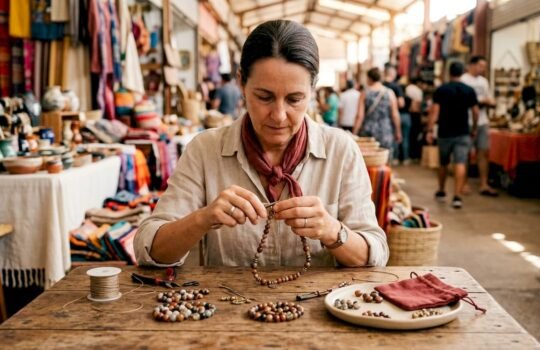
- Craftsmanship: Hand-strung, knotted, or woven by artisans who understand the tradition, not machine-stamped replicas.
- Cultural respect: Pieces that honor the tradition they draw from, whether Vajrayana Tibetan, Zen Japanese, Theravada Southeast Asian, or a contemporary adaptation that acknowledges its roots.
The sections below walk through each of these dimensions in depth, so you can make a choice that actually means something.
What makes Buddhist bracelets symbolically meaningful?
Buddhist bracelets carry meaning at every level of their construction. The number of beads, the material, the color of the thread, the presence or absence of a guru bead — none of these are arbitrary design choices. Understanding them is what turns a bracelet into something you actually use rather than something you simply wear.
Bead counts and what they represent
The number 108 sits at the center of Buddhist mala tradition. It is regarded as sacred across Indian religions, with many symbolic explanations attached to it across different schools and teachers. The practical point is that 108 gives a complete, consistent round for mantra recitation. Wrist malas use factors of that number: 18, 21, or 27 beads, each allowing practitioners to complete a full 108-count mantra cycle by performing multiple rotations.
The guru bead sits apart from the counting beads. It marks where a round begins and ends, and by convention you do not pass over it. Instead, you stop, pause, and reverse direction. In Tibetan Buddhism, this reversal is understood as a mark of respect toward your spiritual teacher. You do not “tread over” the teacher. It is a small ritual gesture, but it gives the practice a quality of attention that counting alone cannot.
Color symbolism
Colors in Buddhist bracelets are not decorative choices. Each carries a specific spiritual intention: white for purity, red for compassion, green for healing, blue for wisdom, yellow for joy, black for protection, and purple for spiritual insight. In Tibetan practice, white beads and white thread are specifically associated with purification practices and peaceful deity yoga. Black and rudraksha beads are linked to wrathful practices and protection from malicious influences. Gold and silver materials connect to practices aimed at increasing merit, knowledge, or lifespan.
Pro-tip: Before choosing a bracelet by color, identify the quality you most want to cultivate. A green bracelet chosen for healing carries more personal weight than one picked because it matches your wardrobe.
Structural elements and their meanings
Beyond beads and color, the string, knots, and counters all support meditative practice by aiding concentration and rhythm. Some malas include marker beads at intervals within the 108, helping practitioners track longer recitation sets. Tassels at the end of a full mala often represent the lotus flower, a central Buddhist symbol of purity emerging from muddy water.
Key symbolic elements at a glance:
- Guru bead: Marks the teacher, the teachings, and the turning point of each cycle.
- Tassel or lotus knot: Represents the lotus and the practitioner’s aspiration toward awakening.
- Marker beads: Divide the mala into sections for tracking longer practice sets.
- Thread color: Signals the type of practice or spiritual intention the mala is aligned with.
- Knots between beads: Common in Tibetan malas, they protect the beads and slow the pace of recitation, encouraging deliberate attention.
Wearing a distinctive mala also functions as a symbol of religious identity, marking the wearer as a member of a specific spiritual community. In Chinese Buddhism, mala bracelets are given to laypeople during refuge ceremonies and worn as a constant representation of the Buddha’s presence in daily life.
Types of Buddhist bracelets and how they are used
Buddhist bracelets are not a single category. The tradition spans multiple schools, each with its own bead forms, counts, materials, and ritual purposes. Knowing the differences helps you choose a piece that fits your actual practice rather than a generic idea of “Buddhist jewelry.”
Full malas adapted as bracelets
A full 108-bead mala is traditionally worn around the neck or carried in the hand during recitation. When worn on the wrist, it wraps multiple times and functions as both a spiritual tool and a visible symbol of practice. In Chinese Buddhism, monks wear malas around their necks when not in active use; laypeople often wrap them at the wrist. This style suits practitioners who want the full symbolic weight of the 108-bead count in a wearable form.
Wrist malas
Wrist malas with 18, 21, or 27 beads are the most practical form for daily wear. They fit comfortably on the wrist, allow discreet mantra counting throughout the day, and carry the same structural logic as a full mala, enabling completion of the traditional 108-bead mantra cycle through multiple rotations.
Blessed thread bracelets
These are among the most spiritually specific forms. In Thai Theravada tradition, cotton thread bracelets known as Sai Sin are blessed by monks during ceremony. The thread runs through the hands of the monks, connecting the congregation to the merit generated by the prayers. After the ceremony, lengths are cut and tied to wrists while words of protection and good fortune are spoken. A bracelet blessed during ceremony is a physical extension of specific teachings or protection, something an identical commercial version without that ritual context simply cannot replicate.
Regional and school-specific variations
Different Buddhist traditions produce distinctly different bracelet forms:
- Vajrayana (Tibetan): Elaborate malas blessed by lamas, often made from bone, precious stones, or rudraksha. Used in tantric practices with complex visualization and mantra recitation. Kept private in some esoteric contexts.
- Zen (Japanese): Shorter juzu beads, typically 27 or 54 beads, emphasizing simplicity. Used primarily for chanting; the form of the beads can signal which Zen school the practitioner belongs to.
- Theravada (Southeast Asian): Simple seed or wood malas for recitation of the Buddha’s name or basic chants. Thai Sai Sin thread bracelets are the most widely recognized form in this tradition.
- Pure Land: Beads held over both hands in gasshō as an expression of reverence, not primarily for counting. The focus is on the quality of attention, not the number of recitations.
- Contemporary adaptations: Wrist malas and thread bracelets worn as mindfulness anchors by practitioners and non-practitioners alike, often incorporating traditional materials and colors without strict ritual use.
Pro-tip: If you are new to Buddhist bracelets, a wrist mala with 18, 21, or 27 beads in sandalwood or bodhi seed gives you a historically grounded starting point that works across multiple traditions.
Materials and craftsmanship: what actually matters
The material of a Buddhist bracelet is not a secondary consideration. In Tibetan Buddhism, different materials are specifically matched to different practices. Choosing a material without understanding what it represents is like choosing a mantra at random. The match between material and intention is part of what makes the bracelet work as a spiritual tool.
Traditional materials and their spiritual associations
- Bodhi seeds: From the species of tree under which the Buddha is said to have awakened. An all-purpose material considered appropriate for any mantra or practice.
- Sandalwood: Fragrant, calming, and traditional across multiple Buddhist schools. Used in Theravada Myanmar practice for samatha meditation malas. Tibetan malas are sometimes consecrated with sandalwood oil.
- Rudraksha: Dried fruitstones of the rudraksha tree, deeply rooted in Indian spiritual practice. Associated with protection and wrathful practices in Tibetan contexts; preferred alongside bone, iron, and turquoise for subjugating malicious influences.
- Yak bone: A Tibetan specialty, used as a reminder of impermanence and mortality. The physical texture of bone keeps the practitioner aware of the body’s finite nature.
- Precious and semiprecious stones: Tibetan Buddhists generally consider malas made from precious stones the finest kind. Agate, sapphire, lapis lazuli, carnelian, and amethyst each carry specific associations. Lapis lazuli connects to wisdom; clear or white stones align with purification practices.
- Crystal and pearl: Associated with peaceful practices and purification. White or clear beads with white thread are the traditional pairing for these intentions.
Pro-tip: An inexpensive mala is in no way spiritually inferior to a costly one. Many practitioners come to value a bracelet simply because it is the one they have used, day after day. The relationship you build with a piece over time matters more than its price.
Craftsmanship and the blessing process
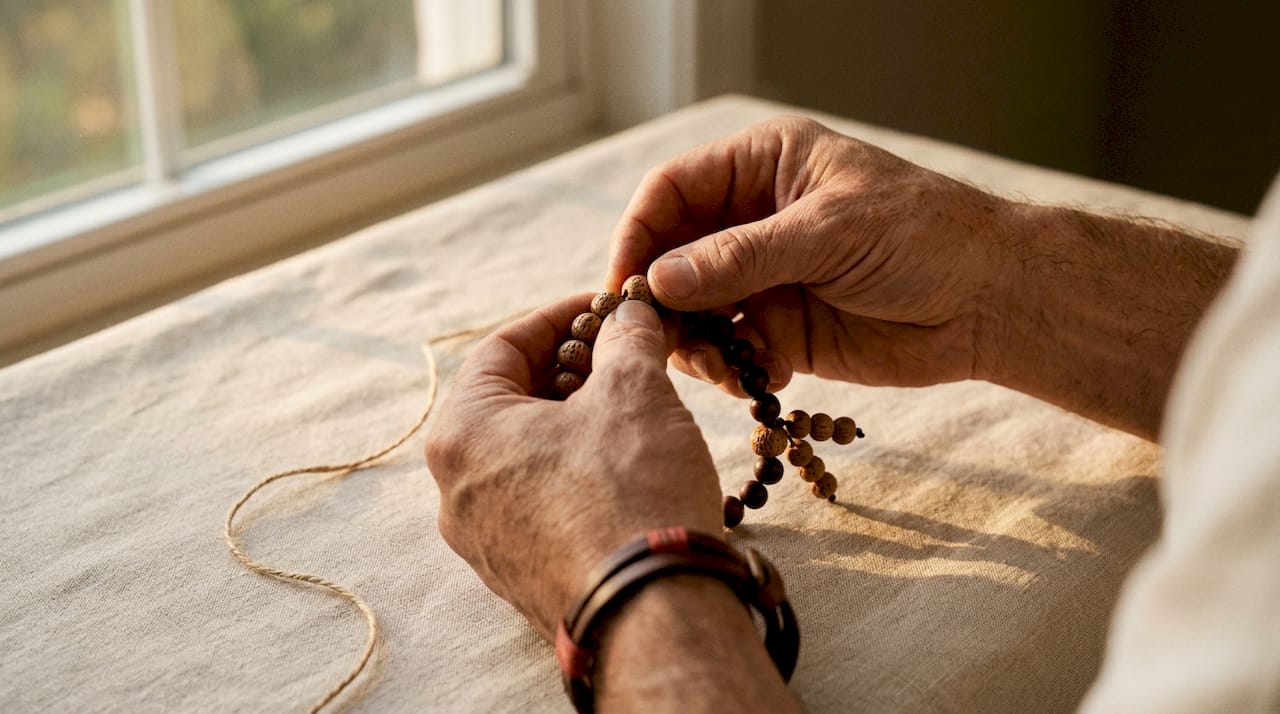
Hand-stringing and knotting between beads is the traditional method across most Buddhist schools. The knots serve a practical purpose (protecting the beads and maintaining spacing) and a meditative one (slowing the pace of recitation). In Tibetan Buddhism, a lama may bless a mala by holding it, performing a tantric visualization, and reciting a mantra over it. This consecration is understood to empower the mala and multiply the effect of recitations performed with it.
The difference between a hand-crafted, traditionally made bracelet and a machine-produced replica is not just aesthetic. The blessing context and ritual play a defining role in a bracelet’s spiritual efficacy. Ceremonies performed by monks confer a sacred status that mass production cannot replicate. For practitioners who want a bracelet to function as a genuine spiritual tool, the craftsmanship and provenance of the piece are worth investigating before purchase.
How wearing a Buddhist bracelet supports mindfulness
The most honest account of what Buddhist bracelets do comes from the Tricycle Buddhist Review: all beads are worry beads. The repetitive tactile movement of passing beads through the fingers calms the body and mind, engaging the nervous system in a way that reduces distraction and promotes focus. This function predates formal religious practice and explains why mala use spread so widely across traditions.
For practitioners, the bracelet does several things simultaneously:
- Mantra counting: Each bead marks one recitation, freeing the mind to focus on the sound or meaning of the mantra rather than keeping count. Common mantras include Om Mani Padme Hum and Om Ah Hum.
- Breath anchoring: One bead per breath is a simple, effective technique for returning attention to the present moment during seated or walking meditation.
- Tactile grounding: The physical sensation of the beads provides sensory feedback that reduces distractions and promotes deeper calm, particularly useful during periods of anxiety or mental restlessness.
- Symbolic reminder: Wearing the bracelet throughout the day functions as a continuous prompt to return to one’s intentions, values, or practice. Buddhist tradition discourages ornate jewelry for monks, but lay practitioners use malas as tools for concentration and anxiety management, with material choices matching their spiritual aims.
- Community identity: A mala worn visibly marks the wearer as someone engaged with Buddhist practice, which can itself reinforce commitment and invite connection with others on a similar path.
The repetitive movement of the beads calms body and mind, making bracelets effective mindfulness anchors for practitioners and non-practitioners alike. This is why wrist malas have found a place in secular mindfulness practice far beyond traditional Buddhist communities, including in Central Europe where interest in contemplative practice has grown steadily over the past decade.
For secular use, the bracelet functions as a portable mindfulness tool. You do not need to recite a mantra to benefit from the tactile focus it provides. Touching the beads during a stressful moment, or simply noticing the weight of the bracelet on your wrist, can serve as a return signal to the present.
How to choose your Buddhist bracelet mindfully
Choosing a Buddhist tradition-inspired bracelet well means thinking about three things at once: what you want the bracelet to do, what tradition it comes from, and whether the piece you are considering was made with the care that tradition deserves.
Start with your spiritual intention
The material, bead count, and color should all follow from what you actually want to cultivate. If your practice centers on calming anxiety and building focus, sandalwood or bodhi seed in a 27-bead wrist mala is a grounded, versatile choice. If you are drawn to protection symbolism, black thread or rudraksha beads carry that specific association in Tibetan practice. For healing intentions, green stones or thread align with Buddhist color tradition. The thread bracelet color meanings you choose are not just aesthetic; they signal an intention to yourself every time you look at your wrist.

Respect the cultural origins
De surge in spiritual accessories has raised real concerns about commercialization and cultural appropriation. Mindful engagement with Buddhist bracelets means treating them as what they are: objects with a specific cultural and spiritual history, not fashion trends. This does not mean only Buddhists can wear them. It means wearing them with awareness of where they come from and what they represent.
Practical steps for mindful selection:
- Research the tradition the bracelet style comes from before purchasing.
- Ask about the maker: Was this hand-crafted by someone with knowledge of the tradition? Was it blessed or consecrated?
- Avoid purely decorative replicas that use Buddhist imagery without any connection to the practice.
- Learn the basic use of whatever you choose, even if your practice is secular.
- Care for the bracelet as you would any meaningful object. Buddhist tradition treats malas as sacred texts; every school stresses that they should be cared for accordingly.
- Wear it with intention. The bracelet is most effective when you engage with it consciously, not just as an accessory.
Consider how you will actually use it
Different uses call for different forms. If you plan to count mantras during seated meditation, a 27-bead wrist mala with a clear guru bead gives you a functional tool. If you want a daily mindfulness reminder you can wear without thinking about it, a simple blessed thread bracelet or a single-strand wrist mala in a meaningful color works well. If you are drawn to the string bracelet symbolism of multiple traditions, a layered approach with different materials and colors can reflect a personal practice that draws from several sources.
The different sects’ diverse uses of bracelets show that personal practice alignment matters more than strict adherence to a single tradition’s rules. Flexible, respectful adoption of these practices is both historically accurate and personally sustainable.
Care and maintenance
Treat the bracelet as a meaningful object, not just jewelry. Store it on an altar or in a pouch when not in use, rather than tossing it in a drawer. In Tibetan practice, a new mala is traditionally washed, scented with sandalwood oil, and consecrated before first use. For thread bracelets, keep them dry when possible and replace them when they wear through rather than wearing a fraying piece out of habit. The physical condition of the bracelet reflects the quality of attention you bring to your practice.
Jewelsbyares: handcrafted bracelets where tradition meets modern style
If you want a bracelet that honors the symbolic depth of Buddhist thread traditions without sacrificing contemporary elegance, Jewelsbyares offers a genuinely different option from mass-market spiritual accessories. Every piece in the collection is artisan-crafted using ethically sourced materials, with attention to the symbolic weight of color, thread, and construction that the traditions described in this article actually require.
De string and thread bracelet collection spans single-strand minimalist designs to multi-layer woven compositions, including red thread bracelets rooted in Buddhist and cross-cultural protection symbolism. The diamond string bracelets bring that same thread tradition into a luxury register, pairing certified diamonds with delicate string settings for a piece that carries meaning and understated glamour simultaneously. Every bracelet ships worldwide in elegant, gift-ready packaging, making it a considered choice for milestone gifting as much as personal wear.
What sets Jewelsbyares apart from generic spiritual jewelry is the combination of real craftsmanship, ethically sourced materials, and a design philosophy grounded in symbolism rather than trend. For anyone in Central Europe seeking a Buddhist tradition-inspired bracelet that respects its origins and wears beautifully in daily life, it is worth a close look.
Belangrijkste punten
The best Buddhist tradition-inspired bracelets combine authentic symbolism, mindfully chosen materials, and real spiritual function, making them meaningful tools rather than decorative accessories.
| Punt | Details |
|---|---|
| Bead count matters | Wrist malas typically use bead counts of 18, 21, or 27, all mathematical factors of the traditional 108, enabling completion of full mantra cycles through multiple rotations. |
| Materials carry spiritual meaning | Bodhi seeds, sandalwood, rudraksha, and gemstones each align with specific Buddhist practices and intentions. |
| Color signals intention | White means purity, red means compassion, black means protection; choose color based on what you want to cultivate. |
| Blessing context is decisive | A thread bracelet tied by a monk during ceremony holds a spiritual status that an unblessed commercial version cannot replicate. |
| Jewelsbyares for daily wear | Jewelsbyares offers artisan-crafted string and thread bracelets rooted in cross-cultural symbolism, ethically sourced and shipped worldwide. |
FAQ
What bracelets do Buddhists wear?
Buddhists wear malas (prayer bead bracelets) and blessed thread bracelets. Wrist malas often have bead counts of 18, 21, or 27, all factors of 108, made from materials such as bodhi seeds, sandalwood, rudraksha, or gemstones, while thread bracelets like the Thai Sai Sin are tied by monks during ceremony.
Which wrist do you wear a Buddhist bracelet on?
The left wrist is the traditional choice in most Buddhist cultures, including Thai Theravada practice where Sai Sin thread bracelets are tied there. In Chinese Buddhism, monks wear malas around the neck when not in active use.
What are Buddhist bracelets called?
Buddhist bead bracelets are called wrist malas or japamala in Sanskrit, meaning “recitation garland.” In Japan they are called juzu or nenju; in Thailand, the blessed thread version is called Sai Sin.
What is the Buddhist good luck bracelet?
The Thai Sai Sin thread bracelet is the most widely recognized Buddhist good luck bracelet. Blessed by monks during ceremony, it is believed to bring protection, good fortune, and blessings to the wearer, and is traditionally tied on the left wrist.
Can non-Buddhists wear Buddhist-inspired bracelets?
Yes, but mindful engagement matters. Wearing a Buddhist-inspired bracelet with awareness of its cultural origins and spiritual meaning honors the tradition. Learning basic use and choosing a piece made with genuine craftsmanship rather than a purely decorative replica is the respectful approach.