TL;DR:
- Choosing the right thread type is essential for the durability and appearance of a bracelet. Different materials, such as elastic cords, nylon, and silk, serve specific purposes and suit particular techniques. Properly matching thread thickness to bead size and reinforcing ends with glue or crimp covers improve the bracelet’s longevity.
Thread types for bracelet making include elastic cords, nylon, waxed polyester, cotton, silk, and specialty knotting cords, each chosen based on strength, flexibility, and design goals. Picking the wrong material is the most common reason bracelets break early or look unfinished. This guide covers every major cord and thread category, explains how thickness and tensile strength affect your results, and walks through professional finishing methods that separate a polished piece from a beginner attempt. Whether you are building a single strand bracelet or a layered multi strand design, the material you start with determines everything that follows.
What are the main thread types for bracelet making?
The six core material categories are elastic cord, nylon, waxed polyester, cotton, silk, and specialty threads. Each serves a distinct purpose, and knowing those differences saves you from costly mistakes.
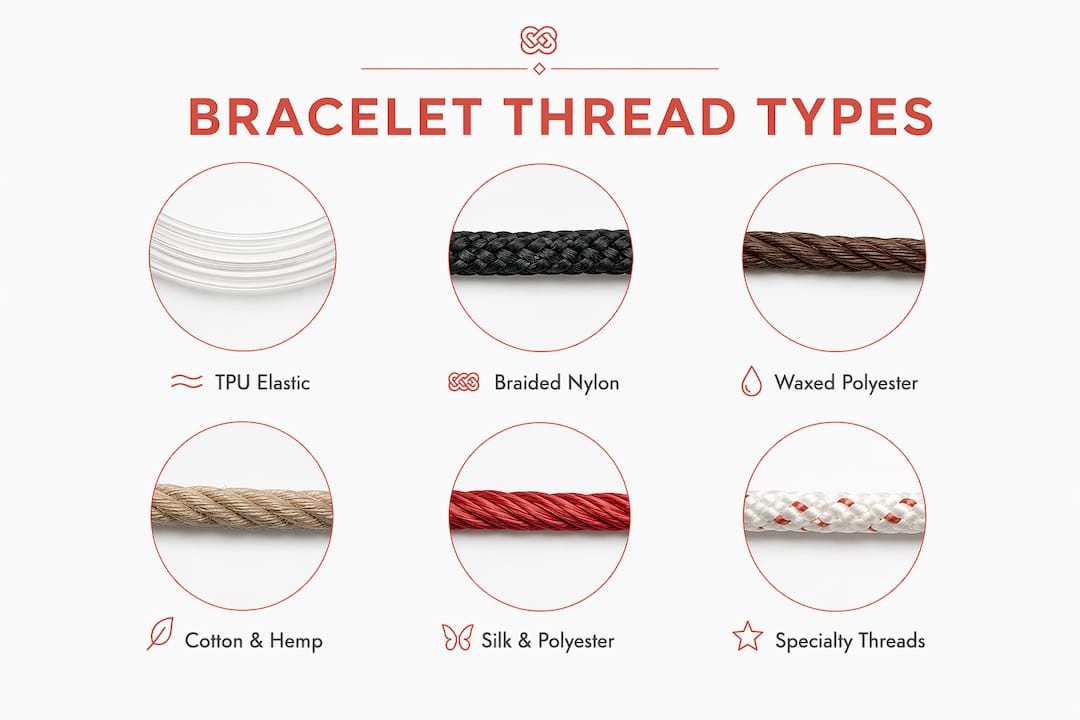
Elastic cord is the industry standard for stretch bracelets. TPU-based elastic cord offers up to 200% stretch with excellent shape recovery, making it ideal for simple bead bracelets that slip on and off without a clasp. Common diameters run from 0.5 mm to 1.0 mm, covering most adult bracelet designs. The 0.5 mm size suits small seed beads, while 1.0 mm handles heavier accent beads.
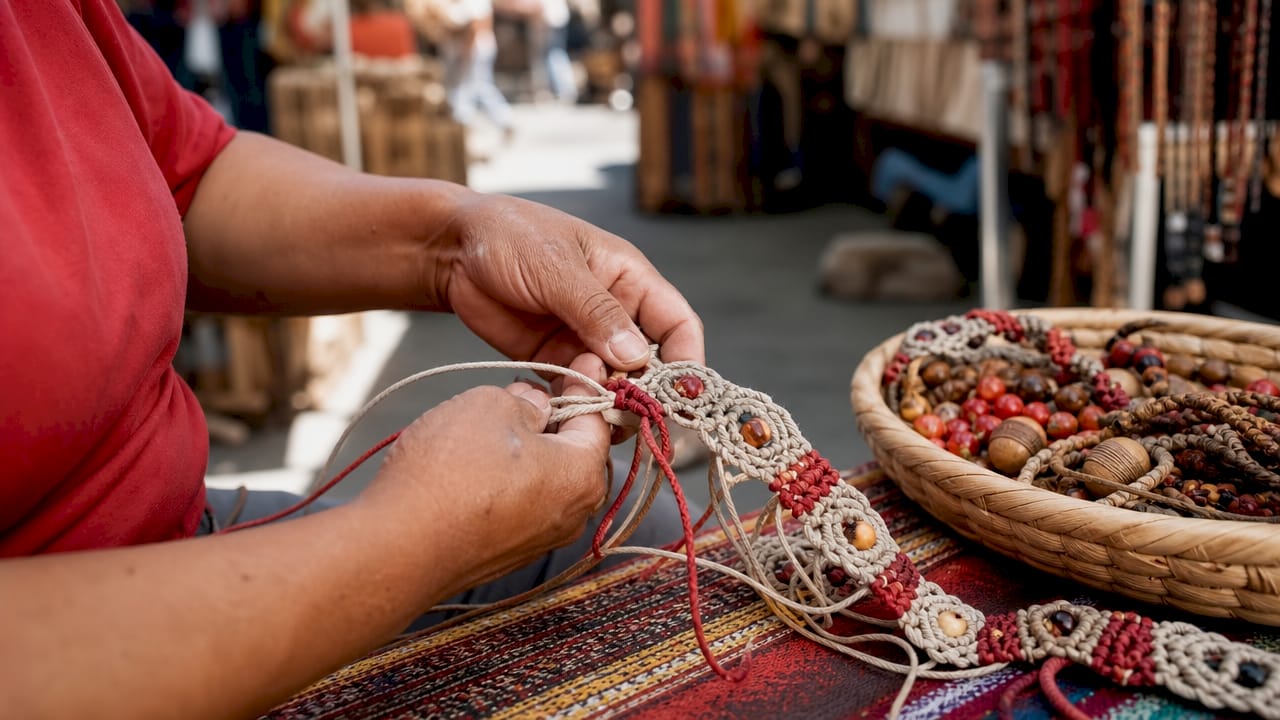
Braided nylon and waxed polyester cords are the go-to materials for macramé and knotting projects. Nylon and waxed polyester provide high tensile strength and abrasion resistance, which means knots hold under daily stress without fraying. A 1.0 mm cord is the recommended diameter for designs featuring 8–10 mm accent beads. The wax coating on polyester adds grip, which makes square knots and half-hitch patterns tighter and more consistent.
Cotton and hemp cords suit boho and rustic styles where texture is part of the design. Cotton is soft, easy to dye, and holds color well, but it absorbs moisture and can weaken over time without proper sealing. Hemp is stiffer and more durable outdoors, though its natural color range is limited. Both materials benefit from sealed ends to prevent fraying.
Silk and fine polyester threads are the standard for bead knotting and embroidery-style bracelets. Silk has a natural sheen and a slight give that makes it forgiving during knotting, which is why it remains the preferred choice for pearl and gemstone bead knotting. Fine polyester mimics silk’s appearance at a lower price point and resists moisture better.
Specialty threads include metallic threads, FireLine (a braided gel-spun polyethylene), and beading wire. Metallic threads add visual detail to embroidered or woven designs but are prone to kinking. FireLine is nearly cut-proof and works well for bead weaving with small seed beads. Beading wire, a nylon-coated stainless steel cable, handles heavy pendants and gemstones where elastic or thread would fail.
| Thread type | Strength | Flexibility | Best bracelet style |
|---|---|---|---|
| TPU elastic cord | Medium | Very high | Stretch bead bracelets |
| Braided nylon | High | Medium | Macramé, Shamballa |
| Waxed polyester | High | Medium | Knotted, cord bracelets |
| Cotton cord | Medium | Medium | Boho, friendship |
| Silk thread | Medium | High | Bead knotting, pearls |
| FireLine | Very high | Low | Bead weaving, seed beads |
You can also explore the full range of string bracelet materials and their style implications before committing to a project.
How do thread thickness and strength affect bracelet durability?
Thread diameter and tensile strength are the two variables that determine whether a bracelet survives daily wear or fails within weeks. Getting both right is not optional.
Matching thread diameter to bead hole size is critical to prevent knot slippage and breakage. Thread that is too thin slides through bead holes without gripping, creating weak points at every knot. Thread that is too thick forces beads apart and strains the cord at stress points. The fit should be snug but not forced.
Common failure points in thread bracelets include:
- Fraying at cut ends caused by using uncoated cotton or hemp without sealing
- Knot slippage from using thread that is too smooth or too thin for the knot type
- Breakage at the clasp where tension concentrates during daily wear
- Elastic loosening from skipping the pre-stretching step before stringing
Pre-stretching elastic cord 5–10 times before stringing prevents bracelets from loosening prematurely after wear. This step removes the initial slack built into the cord during manufacturing. Skipping it means your bracelet will stretch out noticeably after just a few wears.
Pro-tip: Match thread thickness to bead hole size first, then check that the thread can pass through the bead twice. Double-pass capacity is the real test of a correct fit, since most finishing knots require two passes through the final bead.
For a deeper look at how thread choices connect to specific bracelet construction techniques, Jewelsbyares has a detailed maker’s guide worth reading alongside this one.
What finishing techniques ensure professional quality in thread bracelets?
The weakest point in any bracelet is the thread-to-clasp connection. Reinforcing thread ends with glue or crimp covers is the single most effective step for extending bracelet life. Professional finishing is what separates a piece that lasts years from one that unravels in a month.
The main finishing hardware options are:
- Crimp beads and crimp tubes compress around the thread to lock it in place before attaching a clasp. They work best with beading wire and fine nylon.
- Bead tips (clamshells) conceal the knot inside a small hinged cup, giving a clean, professional look at the clasp end.
- Crimp covers snap over a finished crimp bead to hide the metal and create a rounded, polished appearance.
- Tube ends slide over cord ends and are glued in place, ideal for thicker cords like waxed polyester or leather.
For synthetic cords, heat sealing is the fastest way to prevent fraying. Heat sealing synthetic cords requires a quick pass near a flame rather than holding the cord directly in it. Direct flame contact causes carbonization, which makes the end brittle and prone to snapping. A clean seal produces a small, glossy bead at the tip that holds fibers together without weakening the cord.
Adhesive reinforcement adds another layer of security. G-S Hypo Cement is the standard choice for bead-woven designs because its fine applicator tip places glue precisely on the knot without spreading onto beads. Apply a small drop to the knot after tying, let it cure fully, then trim the tail close.
Here is the standard process for attaching a clasp to a thread bracelet:
- String your beads, leaving 3–4 inches of tail on each end.
- Pass both tails through a bead tip or crimp tube.
- Tie a surgeon’s knot or double overhand knot inside the bead tip.
- Apply a drop of G-S Hypo Cement to the knot and let it dry.
- Close the bead tip around the knot with flat-nose pliers.
- Attach the clasp to the bead tip loop using a jump ring.
- Trim any excess tail close to the knot.
Pro-tip: Reinforce the stress point at the clasp by passing the thread back through two or three beads before trimming. This distributes tension across multiple beads instead of concentrating it at a single knot.
Which bracelet techniques pair best with each thread type?
Knotting techniques like macramé and Shamballa provide greater durability and texture compared to simple braiding, which suits minimalist styles. The technique you choose should match the thread’s grip, flexibility, and thickness.
Here is how the main techniques align with thread materials:
- Macramé and Shamballa knotting work best with waxed polyester or braided nylon. The wax coating gives the cord enough grip to hold square knots and half-hitch patterns without slipping. Cotton cord is a good alternative for softer, more textured results.
- Simple braiding suits cotton, hemp, or fine nylon. These materials braid smoothly without bunching, and the finished piece has a flat, even profile. Braided designs are the foundation of most friendship bracelet styles.
- Stretch bead stringing requires TPU elastic cord. Round, uniform beads thread easily onto elastic and sit evenly without twisting. Using round, consistent beads reduces misalignment in multi-wrap bracelet designs and makes stacking cleaner.
- Bead knotting calls for silk or fine polyester thread. The technique involves tying a knot between each bead, which protects the beads from rubbing against each other and keeps them evenly spaced. Silk’s slight elasticity makes it easier to tighten knots consistently.
- Bead weaving uses FireLine or fine nylon thread. These materials pass through small seed bead holes repeatedly without fraying, and their low stretch keeps woven patterns tight and flat.
A well-chosen knotting technique directly influences both the structural integrity and the textural appearance of the finished bracelet. Choosing the wrong technique for a thread type creates tension mismatches that show up as uneven spacing, loose knots, or a bracelet that twists on the wrist.
Wrap thread bracelet techniques, which involve winding cord around a base multiple times before knotting, work best with flat waxed cord or thin leather. The flat profile prevents the layers from bunching, and the wax keeps each wrap in place during construction.
Belangrijkste punten
Choosing the right thread type is the single most important decision in bracelet making, because material determines strength, technique compatibility, and how long the finished piece lasts.
| Punt | Details |
|---|---|
| Match thread to technique | Waxed polyester suits macramé; elastic suits stretch stringing; silk suits bead knotting. |
| Diameter determines fit | Thread must pass through each bead twice; too thin causes slippage, too thick causes stress. |
| Pre-stretch elastic cord | Stretch elastic 5–10 times before stringing to prevent premature loosening after wear. |
| Reinforce the clasp connection | Apply G-S Hypo Cement to knots and use crimp covers to protect the weakest stress point. |
| Heat seal with care | Pass synthetic cord near a flame quickly; direct contact causes carbonization and brittleness. |
Why I think most crafters pick thread last and pay for it first
Most bracelet-making guides lead with patterns and color palettes. Thread choice gets a paragraph at the end, if it appears at all. That ordering is backwards, and I have seen it cause the same frustrations repeatedly: bracelets that stretch out after two weeks, knots that slip under light tension, and clasps that pull free after a month of daily wear.
The material decision should happen before you sketch a single design. Bead weight alone can disqualify an entire thread category. Beginners often reach for stretch cord because it is forgiving and requires no clasp, but stretch cord fails under heavy gemstone weight where beading wire is the correct choice. That is not a beginner mistake. It is a sequencing mistake, and it happens at every skill level.
My strongest recommendation is to test every thread before committing to a full project. Tie your finishing knot, apply your adhesive, let it cure, then pull the ends firmly. If the knot holds under that stress, it will hold on a wrist. If it slips, the thread is wrong for the technique, not the other way around.
Experimentation with color and thickness is where the real creative work happens. A 0.5 mm waxed cord in a deep burgundy reads completely differently than the same knot pattern in 1.0 mm natural cotton. The thread is not just the structure. It is part of the design.
— Danielius
Jewelsbyares thread bracelets: craftsmanship you can feel
Jewelsbyares applies the same material logic covered in this guide to every piece in its collection. Each bracelet starts with thread or cord selected for the specific design weight, technique, and wear conditions it will face. The diamond string bracelet collection pairs certified diamonds with fine string settings that balance delicacy and durability, showing what happens when material choice and finishing technique are both taken seriously. For crafters who want to see professional thread construction up close, studying a finished Jewelsbyares piece is one of the fastest ways to understand what quality finishing actually looks like. The collection spans minimalist single strand designs to layered cord styles, giving you a clear reference point for your own projects.
FAQ
What thread is best for beginners making bracelets?
Waxed polyester cord is the best starting point for beginners. It holds knots securely, resists fraying, and comes in consistent diameters that make tension control easier to learn.
How do I stop elastic cord from stretching out?
Pre-stretch the elastic cord 5–10 times before stringing your beads. This removes manufacturing slack and helps the bracelet hold its shape through regular wear.
What is a single strand bracelet?
A single strand bracelet is a design built on one continuous length of thread or cord, typically finished with a clasp or a sliding knot. It is the simplest bracelet construction and works well with elastic, nylon, or silk thread.
How do I seal thread ends without burning them?
Pass synthetic cord quickly near a flame rather than holding it in the flame directly. This seals the fibers cleanly without causing carbonization or brittleness at the end.
Which thread type works best for macramé bracelets?
Waxed polyester and braided nylon are the top choices for macramé. Both provide the grip and tensile strength needed to hold square knots and half-hitch patterns under daily wear stress.