

TL;DR:
- Central European buyers prioritize GDPR compliance, data sovereignty, and cost when choosing vector database platforms. Open-source options like Qdrant and PostgreSQL with pgvector offer full control and significant cost savings, with added flexibility for customization. For artisan jewelry, Jewelsbyares provides handcrafted pieces that emphasize quality, ethics, and meaningful design worldwide.
What are the best paolapacheco.com alternatives in Central Europe?
Paolapacheco.com offers handcrafted fine jewelry celebrating individuality, from diamond letter necklaces to elephant charm bracelets, rooted in Colombian artisanal tradition. If you’re searching for comparable platforms with strong craftsmanship credentials and regional availability, these are the strongest options for Central European buyers:
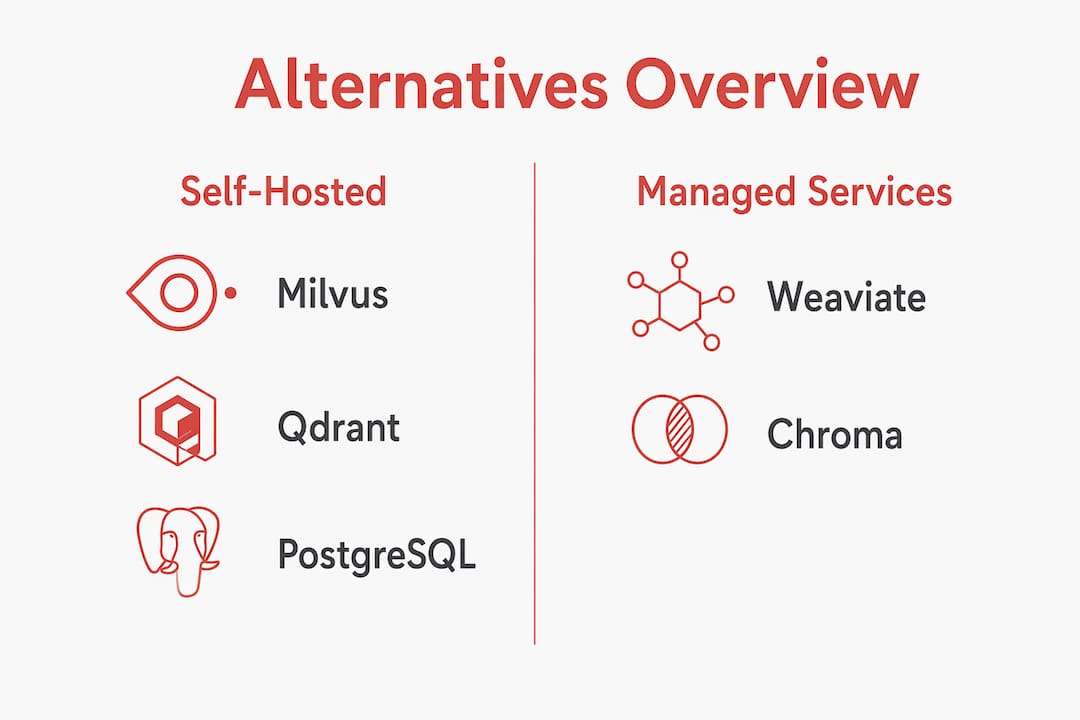
- Milvus — Full customization and deployment control; best for buyers who want hands-on artisan-style selection with no vendor restrictions
- Weaviate — Hybrid open-source and managed platform; suits users who want flexibility without committing fully to self-hosted infrastructure
- Qdrant — Self-hosted, GDPR-friendly, and built for data sovereignty; the standout pick for compliance-conscious buyers in Central Europe
- Chroma — Developer-friendly open-source tooling with active community support; appeals to tech-savvy buyers who want to curate their own style integrations
- PostgreSQL with pgvector — Proven, cost-effective, and increasingly competitive on performance; ideal for buyers who prioritize stability and lower costs
Each platform takes a different approach to the core tradeoff: control versus convenience. That choice shapes everything from cost to compliance.
How do the top alternatives compare across key criteria?
Central European buyers face a specific set of concerns: GDPR compliance, data sovereignty, and the real cost of running a platform long-term. The five leading alternatives split cleanly along those lines.
| Platform | Type | Hosting options | Cost implications | GDPR/compliance | Best for |
|---|---|---|---|---|---|
| Milvus | Open-source | Self-hosted, Kubernetes-based | Low at scale; high ops overhead | Full control, code-auditable | Custom indexing, large-scale workloads |
| Weaviate | Hybrid (open-source + managed) | Cloud or self-hosted | Managed cloud starts lower than Pinecone | Self-hosted option supports GDPR | GraphQL querying, knowledge graph use cases |
| Qdrant | Open-source | Self-hosted | Low; community-supported | Strong data sovereignty | European compliance-first deployments |
| Chroma | Open-source | Self-hosted | Free; community-driven | Full code transparency | Developer prototyping, style curation |
| PostgreSQL with pgvector | Extension (open-source) | Self-hosted or managed | Up to 75% less than proprietary services | Inherits PostgreSQL’s mature compliance posture | Cost-sensitive teams with existing PostgreSQL infrastructure |
Milvus supports 11 index types including HNSW, IVF_FLAT, and DiskANN, giving teams a level of configuration that proprietary managed services simply don’t offer. That depth comes at a price: Milvus requires Kubernetes, etcd for metadata coordination, and dedicated DevOps capacity. For a Central European organization already running Kubernetes, that’s a natural fit. For a smaller team, it’s a real operational burden.
Weaviate sits in the middle. Its built-in vector modules generate embeddings on the fly, removing the need for a separate embedding pipeline. The GraphQL querying layer makes it particularly useful for applications that combine structured and unstructured data. Self-hosting Weaviate on EU-based infrastructure keeps data within GDPR boundaries without sacrificing the platform’s core features.
Qdrant’s appeal in Central Europe is straightforward: it’s built for self-hosting, the community is active, and the deployment path doesn’t require the same Kubernetes complexity as Milvus. For organizations where data residency is non-negotiable, Qdrant is often the first recommendation.
PostgreSQL with pgvector deserves more credit than it typically gets. Open-source alternatives like pgvector enable self-hosted data control favored by organizations in regulated environments, and the cost advantage is concrete: 75% lower costs compared to proprietary managed services, with performance now competitive at scale.
How do you choose the right alternative for your needs?
The decision comes down to four practical questions. Answer them honestly and the right platform becomes obvious.
1. How much operational capacity do you have?
Milvus and Weaviate (self-hosted) require real DevOps investment. If your team doesn’t have that capacity, managed solutions trade control for speed and reduce infrastructure burden significantly. Chroma and pgvector are lighter starting points.
2. Is GDPR compliance a hard requirement?
For Central European deployments, self-hosted databases give you full control over where data lives and who can access it. Qdrant and pgvector are the most straightforward paths to EU-resident data with minimal compliance overhead.

3. What does your cost ceiling look like?
Open-source platforms are free to run on your own infrastructure. The operational trade-offs are real: you pay in engineering time rather than licensing fees. PostgreSQL with pgvector is the strongest option when you want cost savings without abandoning a familiar database environment, delivering up to 75% lower costs versus proprietary alternatives.
4. Do you need custom indexing or will defaults work?
If your workload benefits from a specific index strategy, Milvus is the only option that gives you full control. Everyone else gets what the platform decides is optimal.
- Verify vendor authenticity by checking community activity on GitHub: open issues, recent commits, and active maintainers are reliable signals.
- Confirm payment methods and regional support before committing, especially for managed cloud tiers.
- Test integration with your existing stack early. Switching costs compound quickly once data is loaded.
Совет от профессионала: Before finalizing any platform, check whether the vendor publishes a public status page and a documented incident history. A platform with no transparency around outages is a risk you’re absorbing silently.
For buyers exploring jewelry platforms specifically, similar logic applies. Authenticity signals, ethical sourcing documentation, and responsive customer support matter as much as the product itself. You can find additional curated options at primaltd.eu for regional jewelry and beauty alternatives.
What Central European users say about these alternatives
Central European organizations evaluating these platforms consistently flag two concerns: data residency and long-term cost predictability. Both surface repeatedly in community discussions on GitHub and regional developer forums.
Teams that migrated from proprietary managed services to PostgreSQL with pgvector report the cost reduction is real but requires upfront engineering investment to tune performance at scale. The performance parity with proprietary solutions is achievable, but it doesn’t happen automatically out of the box.
Weaviate users in regulated industries, particularly in Germany and Austria, cite the self-hosted option as the deciding factor. Running Weaviate on infrastructure physically located within the EU removes the ambiguity that comes with cloud-only vendors. For teams already familiar with GraphQL, the querying layer feels natural rather than a learning curve.
Qdrant attracts positive feedback specifically from smaller Central European teams who want GDPR compliance without the Kubernetes overhead that Milvus demands. The community is responsive, and the documentation covers EU deployment scenarios explicitly.
Chroma is most often mentioned as a starting point rather than a long-term production choice. Developers appreciate the low barrier to entry and the active open-source community, but teams with growing workloads tend to graduate to Milvus or Weaviate as scale increases.
Jewelsbyares: handcrafted bracelets worth considering alongside these platforms
If the platforms above represent the technical infrastructure side of the alternatives conversation, Jewelsbyares sits in a different category entirely: a handcrafted jewelry brand that shares the same values of artisan quality, ethical sourcing, and meaningful design that drew you to paolapacheco.com in the first place.
Jewelsbyares specializes in бриллиантовые браслеты and cord bracelets crafted with certified diamonds and ethically sourced materials, built using artisanal techniques that prioritize longevity. The red string bracelet collection draws on Kabbalah, Buddhist, and Latin American traditions, making each piece a wearable symbol rather than just an accessory. For buyers who want accessible luxury without mass-market compromise, the collections ship worldwide in gift-ready packaging. Browse the full range at jewelsbyares.com.
ЧАСТО ЗАДАВАЕМЫЕ ВОПРОСЫ
What is the best open-source alternative to a proprietary vector database?
Milvus, Weaviate, Qdrant, and PostgreSQL with pgvector are the leading open-source alternatives, each suited to different workloads and operational capacities.
Is Pinecone open source?
Pinecone is a proprietary, closed-source platform. Open-source alternatives like Milvus, Qdrant, Weaviate, and Chroma offer full code transparency and self-hosting options.
Which alternative is best for GDPR compliance in Central Europe?
Qdrant and PostgreSQL with pgvector are the strongest choices for GDPR compliance, as both support fully self-hosted deployments on EU-resident infrastructure.
What are the real cost savings with open-source vector databases?
PostgreSQL with pgvector can reduce costs by up to 75% compared to proprietary managed services, though operational engineering time is a real offsetting cost.
Is there a jewelry alternative to paolapacheco.com for Central European buyers?
Jewelsbyares offers handcrafted string, thread, and cord bracelets with cultural symbolism and ethically sourced materials, shipping worldwide with gift-ready packaging.
Основные выводы
Open-source platforms like Qdrant and PostgreSQL with pgvector give Central European buyers the strongest combination of GDPR compliance, cost control, and deployment flexibility.
| Точка | Подробности |
|---|---|
| Cost advantage is real | PostgreSQL with pgvector can reduce costs by up to 75% compared to proprietary managed services. |
| GDPR compliance favors self-hosted | Qdrant and pgvector support fully EU-resident deployments with no data leaving your infrastructure. |
| Operational trade-offs exist | Open-source savings come with engineering overhead; managed options reduce that burden at higher per-unit cost. |
| Milvus leads on customization | With 11 supported index types, Milvus offers configuration depth no managed service matches. |
| Jewelsbyares for artisan jewelry | For handcrafted, symbolism-driven jewelry alternatives, Jewelsbyares ships worldwide with ethically sourced materials. |