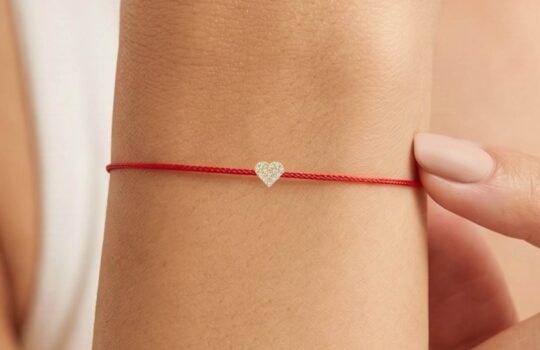

Your bracelet choice is a personality statement before it’s a fashion decision. When you select bracelet by traits rather than by trend, you end up with pieces that feel genuinely yours instead of borrowed from someone else’s aesthetic. The process of personality-based jewelry selection draws on well-established psychological frameworks, particularly the Big Five personality model and the Myers-Briggs Type Indicator (MBTI), to match bracelet styles with the traits that define how you move through the world.
Here’s what that looks like in practice:
- Extroverts tend toward casual, layered, and visually bold styles that invite conversation
- Conscientious personalities gravitate to classic, structured pieces with clean lines
- Neurotic or emotionally sensitive types often prefer romantic, elegant styles that feel comforting
- Open-to-experience personalities reach for vintage, mixed-material, or artisan-crafted pieces
- Agreeable types favor classic and casual styles that feel socially harmonious
Beyond aesthetics, the bracelet you wear daily functions as a social marker, an emotional anchor, and in some traditions, a spiritual talisman. The right piece doesn’t just look good. It reinforces who you are.
Why your personality shapes your bracelet preferences
The connection between personality and accessory choice isn’t intuitive guesswork. A 2024 study of 369 women aged 20–35 found statistically significant correlations between Big Five personality traits and accessory style preferences, with extroverts favoring casual simplicity and conscientious individuals choosing classic, formal styles above all others.

Bracelets function as what researchers call social identity markers, pieces that help wearers manage transitions between social roles like worker, partner, or parent. You probably already do this without naming it. The bracelet you wear to a job interview differs from the one you wear to a weekend market, and that difference is psychological before it’s stylistic.
There’s also a neurochemical dimension. Completing a jewelry ensemble that holds personal symbolism triggers dopamine release, producing a measurable confidence boost. This explains why wearing a bracelet tied to a meaningful memory or intention feels different from wearing a random accessory. The meaning is doing real psychological work.
Urban women in particular use non-precious material jewelry as a form of emotional regulation, a way to manage anxiety and identity uncertainty through playful, low-stakes self-expression. The bracelet becomes a coping tool, not just an ornament.
How personality frameworks map to bracelet styles
Two frameworks dominate personality-based styling: the Big Five (also called OCEAN) and the MBTI. Neither is a rigid prescription, but both offer useful starting points for narrowing your options.
Big Five traits and their bracelet affinities
The Big Five model breaks personality into five dimensions: Openness, Conscientiousness, Extroversion, Agreeableness, and Neuroticism. Research consistently links each to distinct style preferences:
- High Openness: Vintage, artisan, mixed-material, and culturally symbolic bracelets. You’re drawn to pieces with a story behind them.
- High Conscientiousness: Classic chain bracelets, minimalist gold or silver cuffs, structured bead designs. Clean, intentional, built to last.
- High Extroversion: Layered cord stacks, bold charm bracelets, colorful thread pieces. The more wrist presence, the better.
- High Agreeableness: Classic and casual styles that blend rather than stand out. You want harmony, not contrast.
- High Neuroticism: Romantic, elegant styles with soft textures. Comfort and familiarity matter more than novelty.
MBTI types and bracelet style tendencies
| MBTI Category | Typical Bracelet Style | Why It Fits |
|---|---|---|
| ENFP / ENFJ | Layered colorful thread bracelets | Expressive, people-oriented, emotionally warm |
| INTJ / INTP | Single minimalist cuff or chain | Functional, private, values precision |
| ISFJ / ESFJ | Classic pearl or charm bracelet | Tradition-minded, relationship-focused |
| ESTP / ESFP | Bold cord or leather bracelet | Action-oriented, present-focused, tactile |
| INFJ / INFP | Symbolic string or red thread bracelet | Meaning-driven, introspective, values depth |
| ENTJ / ESTJ | Structured metal or formal bead bracelet | Decisive, goal-oriented, projects authority |
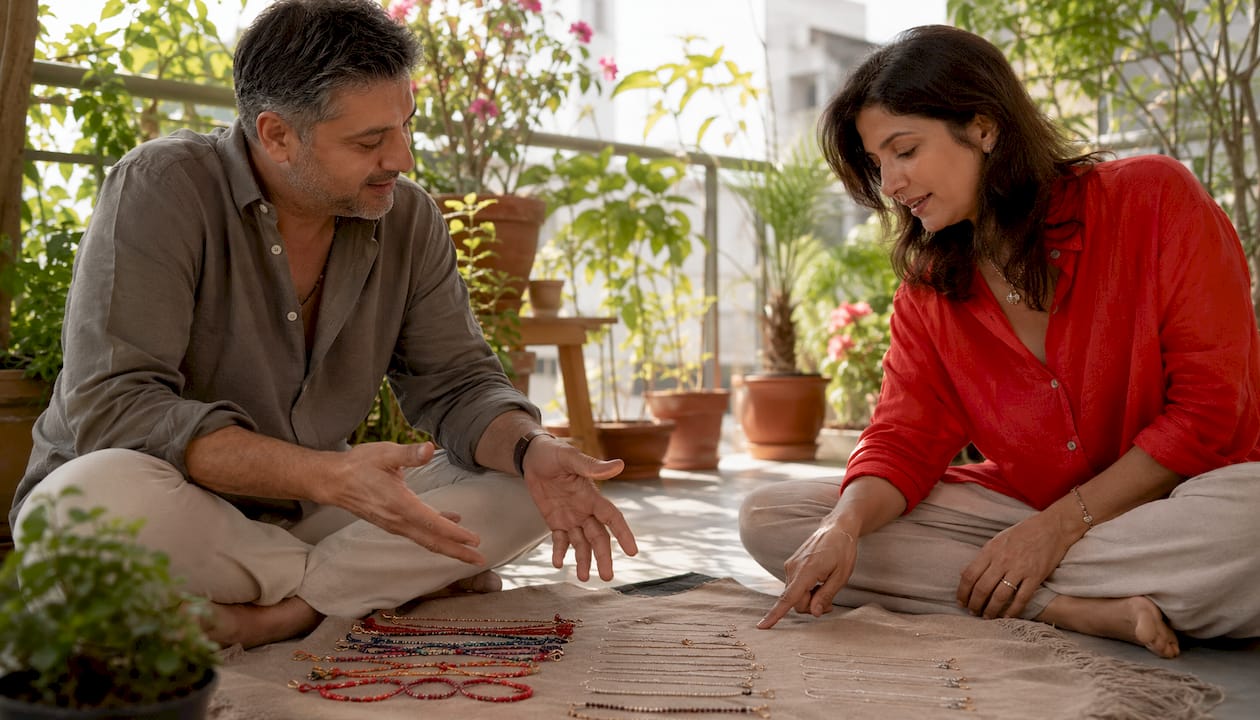
Совет от профессионала: Don’t treat your MBTI result as a shopping list. Use it as a lens to notice which styles feel instinctively right, then let that feeling guide you toward pieces with genuine personal resonance.
The key insight from the research is flexibility. Personality frameworks reveal tendencies, not rules. A highly conscientious person might still layer cord bracelets on weekends. The framework helps you start, not finish, the selection process.
1. String and thread bracelets: expressive and emotionally resonant
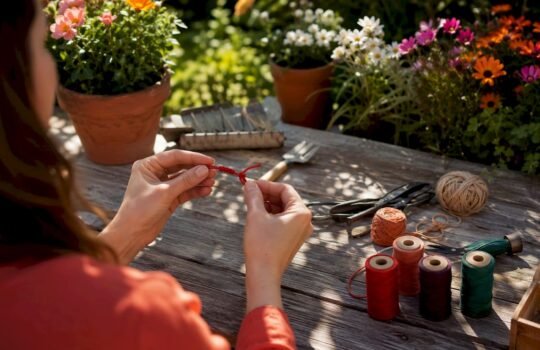
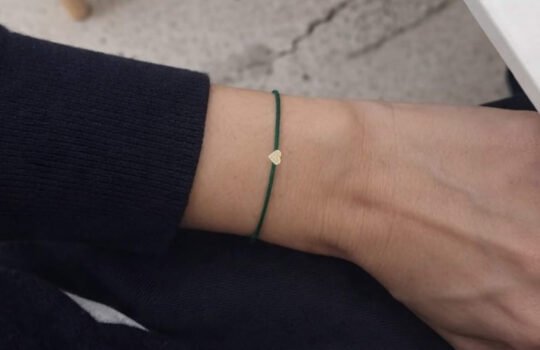
String and thread bracelets are the most personality-flexible category in the bracelet world. A single-strand minimalist design reads as quiet and intentional. A multi-layer woven piece signals creativity, warmth, and openness. The symbolism of string bracelets spans cultures and centuries, from Kabbalah red strings representing protection to Buddhist wrist cords marking spiritual intention.
Personality fit: High Openness, High Agreeableness, INFJ, ENFP. These wearers want their jewelry to mean something beyond its material value.
2. Red string bracelets: protection, connection, and belief
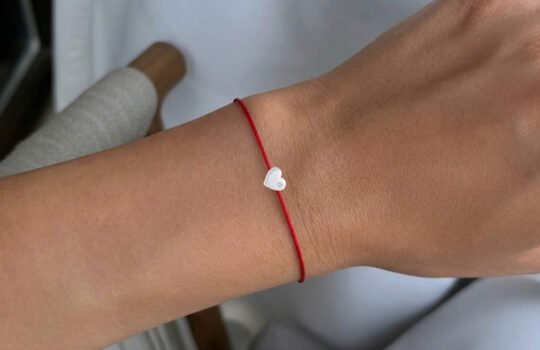
The red string bracelet carries one of the most loaded symbolic histories in jewelry. Across Kabbalah, Hindu, and Latin American traditions, it signals protection from negative energy and a connection to something larger than the self. Wearing one is a deliberate act of meaning-making, which makes it a natural fit for personality types who think deeply about identity and belonging.
Personality fit: High Neuroticism (seeking comfort and grounding), High Openness (drawn to cross-cultural symbolism), INFJ. The bracelet colors and meanings behind red specifically center on love, vitality, and spiritual protection.
3. Cord and leather bracelets: bold, grounded, and tactile
Waxed cord and leather bracelets project a confident, no-fuss energy. They’re durable, tactile, and work equally well solo or stacked. The material itself communicates something: you value substance over shine. Braided cord designs add visual complexity without sacrificing the casual-cool register.
Personality fit: High Extroversion, ESTP, ESFP. These are people who want their accessories to keep up with an active lifestyle without looking like they tried too hard.
4. Minimalist chain bracelets: precision and quiet confidence
A single delicate chain, gold or silver, worn alone on a bare wrist is one of the strongest style signals available. It says “I made a deliberate choice and I don’t need volume to make it count.” Conscientious personalities and introverted types tend to gravitate here because the restraint mirrors their internal orientation toward quality over quantity.
Personality fit: High Conscientiousness, INTJ, ISTJ. Pairs naturally with daily wear bracelets chosen for longevity and versatility.
5. Charm bracelets: narrative and nostalgia
Charm bracelets are essentially wearable autobiographies. Each charm marks a moment, a place, a person, or a value. The accumulation is the point. Wearers of charm bracelets tend to be highly agreeable, emotionally expressive, and relationship-oriented. They use jewelry to tell stories outward and to remind themselves inward.
Personality fit: High Agreeableness, ESFJ, ISFJ. The bracelet grows with the wearer, which suits personalities who find meaning in continuity and connection.
6. Diamond string bracelets: understated luxury with intention
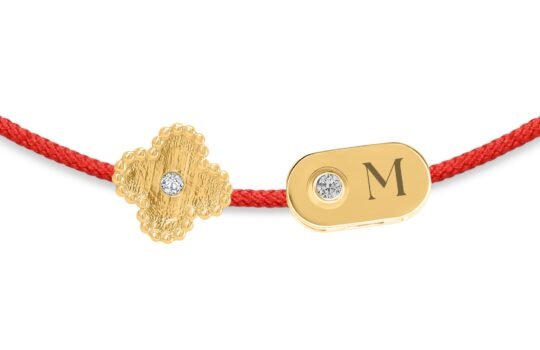
A diamond set into a delicate string or thread setting occupies a specific psychological niche. It’s luxurious without being loud, which appeals to personalities who want to signal refinement without performing it. The contrast between the raw material of the string and the precision of the diamond creates a tension that feels modern and considered.
Personality fit: High Conscientiousness, INTJ, ENTJ. These wearers appreciate craftsmanship and aren’t interested in trend-chasing. The piece needs to hold up aesthetically and emotionally for years.
7. Bead bracelets: grounding, ritual, and cultural identity
Bead bracelets carry some of the oldest symbolic weight in jewelry history. Mala beads in Buddhist practice, worry beads in Mediterranean cultures, and waist beads in West African traditions all use repetition and material to anchor the wearer to a practice or identity. Wearing beads is often a ritual act, not just a style choice.
Personality fit: High Openness, spiritually inclined personalities, INFP. The cultural symbolism behind bead choices runs deep, and selecting the right material (lava stone, turquoise, sandalwood) adds another layer of personal meaning.
8. Layered and stacked bracelets: identity as composition
Stacking multiple bracelets is less about any single piece and more about the composition as a whole. It’s a curatorial act. The wearer is building a visual identity from parts, which research on modular jewelry links directly to fluid self-identity, particularly among younger adults. Research found a positive correlation between interchangeable jewelry personalization and the wearer’s sense of identity alignment.
Personality fit: High Openness, High Extroversion, ENFP, ENFJ. Stacking suits people whose identity is genuinely multidimensional and who want their wrist to reflect that.
Совет от профессионала: When building a stack, anchor it with one piece that holds real personal meaning, then layer around it. The anchor keeps the composition from feeling random.
How to build a bracelet wardrobe that actually reflects you
Getting from “I like bracelets” to a curated wrist that genuinely expresses your personality takes a few deliberate steps. This isn’t about buying more. It’s about buying with intention.
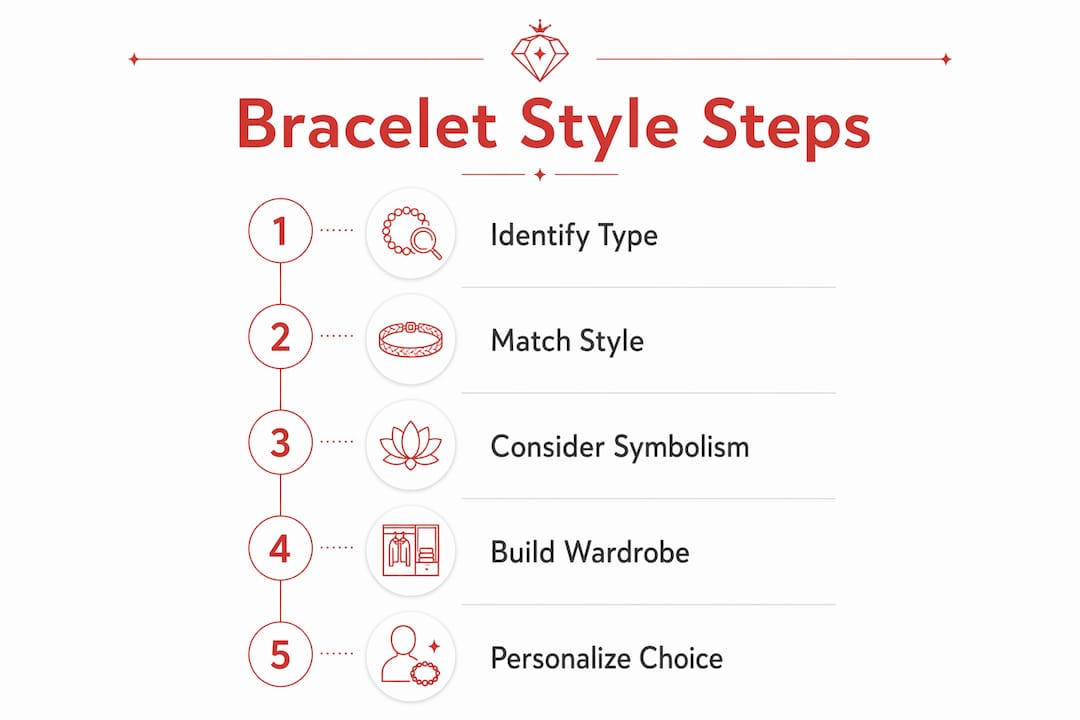
Identify your dominant personality traits. Take a free Big Five assessment or revisit your MBTI type. Note your top two or three traits, not the full profile. Those dominant traits are your style anchors.
Audit what you already own. Pull out every bracelet you own and notice which ones you actually reach for. The pattern tells you more than any quiz. If you keep gravitating to cord bracelets and never touch the delicate chain, that’s data.
Match bracelet types to your lifestyle contexts. A person who works in a creative studio has different daily wear needs than someone in a corporate office. Map your main contexts (work, social, home, active) and identify which bracelet style fits each.
Add one symbolic piece. Choose a bracelet that carries personal meaning beyond aesthetics: a birthstone color, a cultural symbol, a material tied to a memory. Research confirms that символические украшения produces stronger emotional attachment and longer wear frequency than purely decorative pieces.
Consider color intentionally. Bracelet colors carry psychological weight. Red signals vitality and protection. Blue suggests calm and loyalty. Green connects to growth and balance. Black reads as grounded and private. Choosing colors that align with how you want to feel, not just how you want to look, deepens the personal resonance of each piece.
Test before committing to a full stack. Wear a single new piece for a week before adding more. Notice how it affects your mood and how others respond. That feedback loop is more reliable than any style guide.
Avoid forced symbolism. The most common mistake in personality-based jewelry selection is choosing a piece because of what it’s supposed to mean rather than what it actually means to you. A red string bracelet worn without any connection to its tradition is just a red string. Meaning has to be genuine to do psychological work.
Совет от профессионала: Pair your dominant personality bracelet with a contrasting accent piece. A conscientious type who wears a classic chain daily might add a single colorful thread bracelet for weekends. The contrast doesn’t undermine your identity. It adds dimension to it.
What research tells us about personality and bracelet preferences in Central Europe
Central European style culture sits at an interesting intersection: it values craft heritage and material quality while absorbing contemporary minimalist and expressive trends from Western and Northern Europe. That combination shapes how personality traits translate into bracelet preferences in this market.
The foundational data comes from a 2024 study of 369 women analyzing personality traits and accessory style preferences. The findings map cleanly onto Central European style sensibilities:
| Personality Trait | Preferred Bracelet Style | Central European Style Context |
|---|---|---|
| Extroversion | Casual, layered, colorful | Festival culture, urban street style |
| Conscientiousness | Classic, formal, structured | Professional environments, heritage craft appreciation |
| Neuroticism | Romantic, elegant, soft textures | Comfort-driven dressing, quality over novelty |
| Openness | Vintage, artisan, mixed-material | Artisan market culture, cultural tourism |
| Agreeableness | Classic and casual | Social harmony, tradition-respecting style |
Central European buyers also show a strong preference for pieces with verifiable craft provenance. Handmade, ethically sourced, and artisan-finished bracelets carry more weight here than mass-produced alternatives. This aligns with the broader finding that jewelry consumption functions as social signaling, communicating not just personal taste but values and group membership.
The trend toward modular and personalized jewelry is also accelerating in this region, particularly among adults aged 25–40 who want pieces that evolve with their identity rather than dating quickly. Just as zodiac-inspired styling guides like the zodiac hair guide show how personality archetypes shape aesthetic choices across beauty categories, bracelet selection follows the same logic: the piece should reflect who you are, not just what’s currently on trend.
Jewelsbyares approaches this directly. The brand’s handcrafted string, thread, and cord bracelets are built around the idea that a bracelet should carry personal meaning and withstand daily wear without sacrificing beauty. For Central European buyers who value craft and intention equally, that combination is the right fit.
Jewelsbyares bracelets built around who you actually are
Most bracelet brands sell styles. Jewelsbyares sells pieces built around meaning, material quality, and the kind of personal resonance that makes you reach for the same bracelet every morning.
Сайт Коллекция браслетов с бриллиантовыми нитями is the clearest example of this. Certified diamonds set into delicate string settings give conscientious and introverted personalities exactly what they want: luxury that doesn’t announce itself. For expressive, open-to-experience types, the layered cord and thread collections offer the visual complexity and color range to build a wrist composition that’s genuinely personal.
Red string and red thread bracelets carry centuries of protective symbolism across Kabbalah, Buddhist, and Latin American traditions. Jewelsbyares honors those traditions with refined finishing and ethically sourced materials, making each piece a wearable talisman rather than a costume accessory.
Every bracelet ships in elegant, gift-ready packaging, which makes the collection equally strong for self-purchase and milestone gifting. Browse the full range at Джуэлсби-Эйрс and find the piece that fits your personality, not just your outfit.
ЧАСТО ЗАДАВАЕМЫЕ ВОПРОСЫ
How do I figure out my personality type for bracelet selection?
Take a free Big Five (OCEAN) assessment online, or revisit your MBTI result if you have one. Focus on your top two dominant traits, then cross-reference them with the style affinities in this guide to identify your natural bracelet direction.
What does wearing a bracelet on the left wrist mean?
The left wrist is traditionally associated with receiving energy, protection, and intention. Many spiritual traditions, including Kabbalah and Buddhist practice, specify the left wrist for protective bracelets like the red string because it’s closer to the heart.
What is the two-finger rule for bracelets?
A properly fitted bracelet should allow two fingers to slide comfortably between the bracelet and your wrist. Tighter restricts movement and comfort; looser causes the piece to slide and catch on things.
Which personality types prefer minimalist bracelets?
High Conscientiousness and introverted MBTI types (INTJ, ISTJ, INFJ) most consistently prefer minimalist styles. The 2024 study of 369 women confirmed that conscientious individuals ranked classic and formal accessory styles as their top preference.
How do bracelet colors connect to personality expression?
Color choice in bracelets carries real psychological weight. Red connects to protection and vitality, blue to calm and loyalty, green to growth, and black to groundedness. Choosing a color that aligns with how you want to feel, not just how you want to look, deepens the personal meaning of the piece.
Основные выводы
Choosing a bracelet by personality type means aligning bracelet style, material, and symbolism with your dominant Big Five or MBTI traits for pieces that feel genuinely yours.
| Точка | Подробности |
|---|---|
| Personality drives style preferences | A 2024 study of 369 women confirmed extroverts prefer casual styles while conscientious types favor classic, formal designs. |
| Bracelets function as identity anchors | Research shows bracelets help wearers manage social role transitions, acting as psychological anchors between contexts. |
| Modular and symbolic pieces deepen connection | Research found a positive correlation between interchangeable jewelry personalization and the wearer’s sense of identity alignment. |
| Color adds a second layer of meaning | Bracelet color choices (red for protection, blue for calm, black for groundedness) reinforce the personality signal of the style itself. |
| Джуэлсби-Эйрс | Handcrafted string, thread, cord, and diamond bracelets designed for meaningful wear, suited to every personality type from minimalist to expressive. |