

TL;DR:
- Pairing bracelets with a watch requires attention to metal tone, finish, and wrist placement to create a balanced look. Wearing a bracelet on the opposite wrist or stacking only two to three pieces on the same wrist achieves a deliberate, stylish effect. Matching bracelet styles to watch band materials and ensuring proper fit enhances accessory harmony and prevents clutter.
Pairing a bracelet with a watch is the practice of coordinating one or more bracelets alongside your timepiece to create a balanced, intentional wrist look. Done well, it signals style confidence and attention to detail. Done poorly, it reads as clutter. The difference comes down to three principles: metal coordination, bracelet type selection, and wrist placement. Get those right, and your accessories work together instead of competing. Jewelsbyares designs its string, thread, and cord bracelets specifically for this kind of layered, coordinated wear.
What are the key metal and color coordination rules for pairing bracelets with watches?
Metal tone is the single most important variable when you want to pair a bracelet with a watch. Gold pairs with earth tones while silver works best alongside gray, blue, and black. That rule gives you a starting point for every outfit you build around a watch.

The goal is not perfect matching. It is intentional coordination. Your watch case metal should align with the dominant metal in your bracelets, but it should also echo the other hardware you are wearing, including belt buckles, rings, and cufflinks. Coordinating metals across accessories beyond just the watch and bracelet elevates the entire outfit, not just the wrist.
Mixing metals is acceptable when done with purpose. A silver watch paired with a gold bracelet creates visual contrast that reads as sophisticated rather than careless, provided the finishes and proportions are considered. Gentle contrast between mixed metals conveys sophistication when finishes and proportions are well matched. The key word is “intentional.” Accidental mismatches look like mistakes. Deliberate ones look like style.
Finish consistency matters as much as color. Polished finishes pair with polished, and brushed finishes pair with brushed. Mixing a high-gloss watch case with a matte bracelet creates unintended visual dissonance that no amount of color coordination can fix.
- Match your watch case metal to the dominant metal in your bracelets
- Align all hardware across your outfit, including rings and belt buckles
- Mix metals only when you control the finish and proportion
- Pair polished with polished and brushed with brushed
- Use gold for warm, earthy outfits and silver for cool, neutral ones
Consejo de experto: If you are unsure whether a metal mix works, hold both pieces next to each other in natural light. If one looks dull or washed out next to the other, the combination needs adjustment.
How does wrist placement affect the look when layering bracelets with a watch?
Wrist placement is a styling decision, not an afterthought. Wearing a bracelet on the opposite wrist from your watch balances the look and gives each piece room to be noticed. This approach works especially well when you own a statement watch or a bold bracelet that deserves individual attention.
The same-wrist stack is a different approach with a different purpose. Stacking bracelets on the same wrist as your watch creates a curated, layered look that reads as intentional and fashion-forward. The risk is overcrowding. When too many pieces compete for space, the watch gets lost and the overall look feels busy rather than styled.
Comfort is a real factor in this decision. A loose watch band shifts position during movement, and bracelets stacked alongside it will shift too. Precise sizing of link-style watch bands is critical because even slight looseness causes rotation, which disrupts bracelet placement and the overall look. Before you commit to a same-wrist stack, make sure your watch fits correctly.
- Decide whether your watch or your bracelet is the focal point
- Place the secondary piece on the opposite wrist if both are statement pieces
- Stack on the same wrist only when the pieces are scaled to coexist without crowding
- Resize your watch band before building a same-wrist stack
- Limit same-wrist stacks to two or three pieces maximum for a clean result
Consejo de experto: Start with the watch on your dominant wrist and a single bracelet on the other. Add pieces one at a time and step back to assess after each addition. Stop when the look feels complete, not when you run out of bracelets.
Which bracelet styles best complement different watch bands?
The watch band material sets the tone for every bracelet you add. Matching bracelet style to band material creates harmony. Ignoring it creates visual noise.
Leather bands
Classic leather watch straps pair best with delicate bracelets such as fine chains or leather-wrapped styles. Leather has a warm, organic texture that reads as refined without being formal. A thin gold chain or a woven cord bracelet sits naturally alongside it. Chunky metal bracelets overpower a leather strap and create a tonal mismatch.
Metal bracelet watches
Metal bracelet watches work best with link-style or chain bracelets that echo the watch band’s scale and finish. The logic is proportion. A wide, polished steel bracelet watch looks odd next to a thin, matte cord bracelet. Match the weight and finish, and the combination looks deliberate.
Silicone and fabric bands
Silicone and fabric bands are casual by nature. They pair well with beaded bracelets, woven cord styles, or simple string bracelets. Trying to dress up a silicone band with a fine diamond bracelet creates a tonal conflict. The casual base pulls the luxury piece down rather than lifting the overall look.
| Watch band type | Best bracelet match | Avoid |
|---|---|---|
| Leather | Fine chains, cord, leather-wrapped | Chunky metal, oversized beads |
| Metal link | Link chains, polished cuffs | Thin cord, fabric styles |
| Silicone or fabric | Beaded, woven cord, string | Fine diamond chains, formal cuffs |
| Mesh or milanese | Delicate chains, thin bangles | Heavy leather cuffs |
Scale is the underlying principle across all band types. Oversized or bulky bracelets overwhelm the wrist and pull attention away from the watch. Choose bracelets that complement without overshadowing, and the entire wrist composition reads as polished.
What mistakes should you avoid when pairing bracelets with watches?
The most common mistake is ignoring fit. Resizing link bands by adding or removing links directly affects how bracelets sit alongside the watch during movement. A watch that rotates on your wrist will constantly disrupt any bracelet stack you build around it. Fix the fit first.
The second mistake is quantity without curation. More bracelets do not equal more style. Three well-chosen pieces that share a metal tone and a scale create a stronger look than six mismatched ones. Limit your stack and let each piece breathe.
- Fix your watch band fit before adding any bracelets
- Match finishes intentionally, polished with polished, brushed with brushed
- Limit same-wrist stacks to two or three pieces
- Avoid mixing bracelet styles that compete in scale or tone
- Keep the focal piece, watch or bracelet, as the visual anchor
“The goal of accessorizing is not to show everything you own. It is to show that you know what works together.”
Coordinating finishes is the detail most people overlook. A polished rose gold watch next to a brushed rose gold bracelet looks like a mistake, not a choice. Intentional finish matching prevents that kind of unintended dissonance and signals that you understand the rules well enough to apply them.
Puntos clave
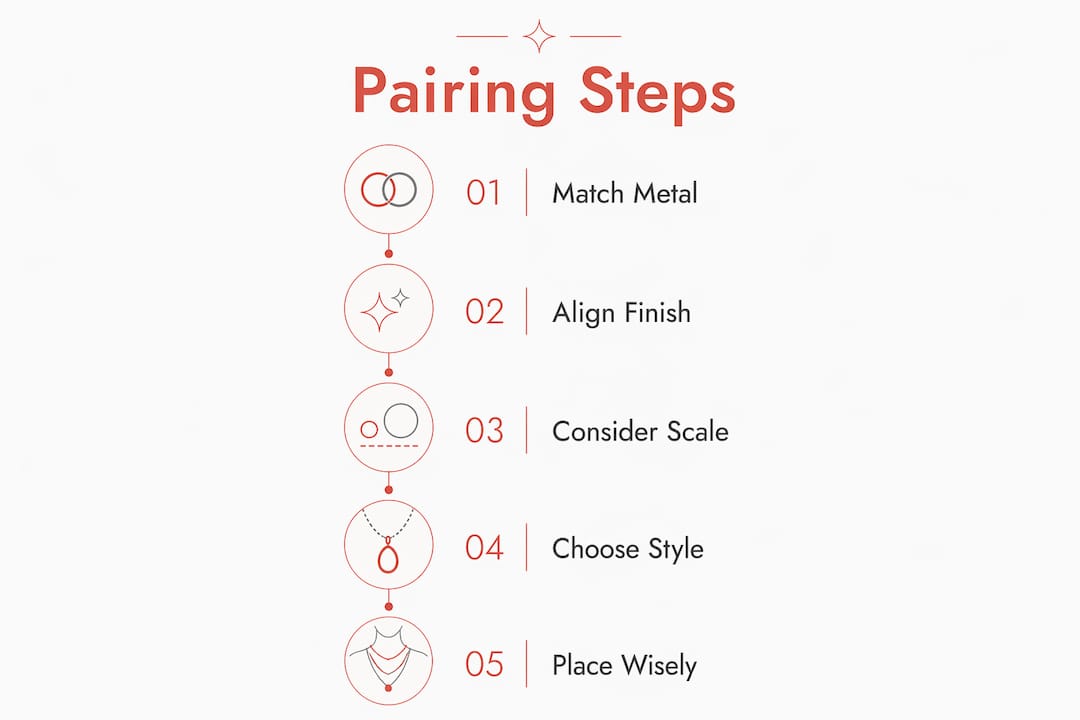
The most effective way to pair a bracelet with a watch is to match metal tones, align finishes, select bracelet styles that suit the watch band material, and resolve fit before building any wrist stack.
| Punto | Detalles |
|---|---|
| Metal tone coordination | Match your watch case metal to your bracelet metal and all other hardware you wear. |
| Finish consistency | Pair polished with polished and brushed with brushed to avoid unintended visual clashes. |
| Wrist placement choice | Use the opposite wrist for balance or the same wrist for a curated stack, not both at once. |
| Band and bracelet compatibility | Match bracelet weight and style to the watch band material for visual harmony. |
| Fit before styling | Resize your watch band to eliminate rotation before building a bracelet stack around it. |
Why I stopped trying to match perfectly and started coordinating instead
The shift that changed how I think about wrist styling was realizing that matching and coordinating are not the same thing. Matching means identical. Coordinating means intentional. For years I avoided mixing metals entirely because I thought the rule was strict. It is not. The rule is that contrast must be controlled.
My favorite combination right now is a brushed silver watch with a thin gold string bracelet on the same wrist and nothing else. The contrast is deliberate. The scale difference between the watch and the bracelet means neither piece fights the other. The string bracelet adds warmth without competing with the watch face.
What I have learned from styling sessions is that most people add too much. They build a stack because they can, not because it serves the look. The best wrist combinations I have seen share one thing: restraint. One strong piece, one supporting piece, and enough empty space for both to register. If you are choosing a bracelet for daily wear, start with the simplest version of the look and add only if something is genuinely missing.
Personal expression matters, but it works best inside a framework. Know the rules well enough to break them with confidence, and your wrist will always look like a choice rather than an accident.
— Danielius
Jewelsbyares bracelets designed to work with your watch
Jewelsbyares builds its collections around the idea that a bracelet should complement your existing accessories, not compete with them. The diamond string bracelet collection offers delicate, minimal designs in warm and cool metal tones that sit naturally alongside leather-band and metal-band watches alike. Each piece is handcrafted with ethically sourced materials, so the quality holds up to daily wear without losing its finish. For those who want something with symbolic weight alongside visual elegance, the red string and cord bracelet collections offer the same refined construction in a more expressive form. Every Jewelsbyares bracelet ships in gift-ready packaging and is sized for both men and women.
PREGUNTAS FRECUENTES
What is the easiest way to pair a bracelet with a watch?
Match your bracelet metal to your watch case metal and keep the scale proportional to the band. Start with one bracelet on the opposite wrist and add pieces only if the look needs more.
Can you wear a silver watch with a gold bracelet?
Yes. Mixing silver and gold works when finishes and proportions are controlled. The contrast reads as sophisticated rather than mismatched when both pieces are well-sized and share a similar finish quality.
How many bracelets should you wear with a watch?
Limit same-wrist stacks to two or three pieces. Oversized or bulky bracelets overwhelm the wrist and pull focus from the watch. Fewer, well-chosen pieces always outperform a crowded stack.
Does it matter which wrist you wear your bracelet on?
Yes. Wearing a bracelet on the opposite wrist from your watch gives each piece visual space. Stacking on the same wrist creates a layered look but requires careful balance to avoid overcrowding.
What bracelet style works best with a leather watch strap?
Fine chains, woven cord bracelets, and leather-wrapped styles complement leather straps best. They share the same organic, warm tone without overpowering the strap’s texture.